Today’s Writing Tip

woman- copy

Here’s another gripe on the “doesn’t get 5-stars” list, though I haven’t seen this one quite as often. This one is when the main character is forgotten. I’ve seen stories that started out with one person and then s/he disappeared at some point and someone else took over.

Huh? Whose story is it? Even the first chapter should start out with the main character, which is sometimes violated, and may cause the confusion in the first place. If someone off-stage is key, use a prologue.

I saw this happen in one book recently where this transition would have been the perfect place to end it and segue into the sequel. However, doing it halfway through the book definitely didn’t work for me. You just get connected with a character and then he disappears? WTF!

Today’s Writing Tip

typewriter-copy

Another complaint that keeps a story from getting 5-stars is too many characters. I would amend that by saying too many extraneous characters. Every person should be tied into the plot in some way and stand out as an individual. If they don’t, ditch him or her. If you really like the person, you can always use him or her for another story.

This is not to say that a meaty plot shouldn’t have a vast array of characters. However, the number should be proportionate to the complexity of the plot and length of the novel. Populating the story with a bunch of people with no story function only keeps the reader wondering what they’re doing there in the first place. For example, if your protagonist’s job is one of the settings, you don’t have to give everyone a name unless the person relates to the story.  In fact, if their place of work doesn’t relate directly to the story, why is it included, anyway? The movie “Nine to Five” certainly was an exception, as well as the TV show, “The Office.” But if it’s not directly related to the plot, minimize it or leave it out completely.

If you do have a long cast of characters and you can justify their existence, then include a dramatis personae in the beginning to help your readers keep them straight as far as where they fit into the story and relationship to one another. A confused reader is inclined to become a lost fan.

Today’s Writing Tip

typewriter-2 copy

Next up on the list of reader gripes is when the characters are all the same. This occurs primarily with inexperienced writers who don’t know how to develop a character properly and just plug a name into the action without bringing him, her, or even it, to life.

Characters should be as distinctive as possible. They shouldn’t look alive, talk alive, or behave alike. The more contrast, the better. Best case, the reader should be able to tell them apart from their dialog alone. Give them speech patterns and mannerisms that make them into a unique person. Interesting characters are what draw readers into the story as much as the plot line. If you don’t care about the people in the story, it has little impact. Building memorable characters is a skill every author should develop.

Today’s Writing Tip

technology-copy

Continuing with our list of reasons why a novel didn’t receive a 5-star review, here is #3 on the list of reader pet peeves. This one involves overuse of a character’s name. I remember one book in particular where this was so glaring I was yelling at my Kindle, saying “I know who you’re talking about, dumbass! He’s totally alone in the wilderness talking to himself!”

Within a single paragraph, the author must have used the protagonist’s name a dozen time. This, my friends, is what pronouns are for. Clearly, this person did not engage the services of an editor, at least a competent one. This was really quite sad because the author’s premise was quite clever, yet it was so poorly written I barely got through it. To his credit, he did build enough suspense for me to want to know how it ended. But I’ll certainly never pick up another book by that person again and you can bet my review was not even close to 5-stars.

Today’s Writing Tip

technology-3 copy

Next on the list after typos for reasons why a story didn’t receive a 5-star review was too many “he said/she saids”. It’s obviously not necessarily to include who said what with every piece of dialog. Again, balance is the key. When it’s a clear “dialog” with one person speaking, then the other, you can go on for a while, as long as it’s reasonably apparent who’s speaking. Nonetheless, an occasional reminder is good, too. If a conversation goes on for a couple of pages, it never hurts to insert either a “s/he said” or perhaps some action, such as a facial expression or gesture, to indicate who’s speaking.

When readers have to go back and figure out who’s speaking, it interrupts the story flow and throws them out of the story, which is something a diligent author should avoid at all costs.

An Author’s Lament on a Hot Summer Day

writeforreviews2

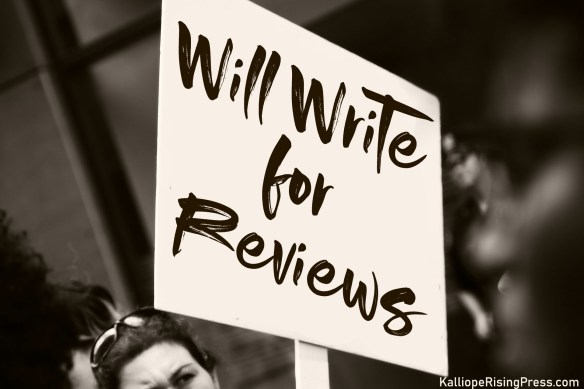
No doubt you’ve seen those unfortunate individuals on the side of the road with a sign that says “Will Work for Food.” Somehow I can relate, though I admit I’m not quite as destitute as those poor souls. Nonetheless, if you’re an author, unless you have a patient spouse who pays the bills or an alternate source of income such as a day job, retirement, or you have the good fortune to be a trust fund baby, chances are your income could be in a similar range, or possibly even less. Way less, like in negative numbers.

It seems no one these days wants to pay for anything, especially if it’s creative. The starving artist has been a familiar entity for eons. People want their music for free, their reading material for free, their games for free, and their artwork for free. This is what the electronic age has brought us. Now that books, music, pictures, and even movies are no longer on tangible media, they’re expected to be free. And of course, now that they’re teaching AI to create, in no time artists of all varieties could be out of business entirely. Muses today get no respect.

So tell me–who out there in any other profession, whether it’s accounting, engineering, administrating, or heaven forbid, even politics, is willing to work for free? To coin an apropos phrase from “Ferris Buehler’s Day Off,” Anyone? Anyone? When’s the last time you went into the grocery store and got your food for free?

Now that I’m retired, I can indulge in pursuing my work as an author. Unfortunately, lately that’s been directed more at marketing and promoting than creating. And the frustration some days is downright scream-inducing. The cash going out for services far outweighs what little comes in. If I were a logical person, I’d quit. If it were only about money, I’d quit. But do I? No. Because writing is in my blood (at least my astrological imprint, which features Kalliope, the muse of epic poetry on my ascendant). While I can make ends meet (barely) through other means, I’d love nothing more than to make a generous (or even adequate…okay, even meager) income from my writing. Tax write-offs are nice, but after a while it gets old. Just once I’d like to finish in the black.

The one thing authors appreciate (most the time, anyway) is a review, especially when we give away our books. And trust me, selling it for 99c is virtually the same as giving it away. Thinking about how long it took to write, edit, and publish it is verboten, because that’s downright depressing. I couldn’t even begin to calculate what I make per hour when selling a book for 99c, most likely less than a Mexican peso per hour, maybe even per day, if that. Yet people who are qualified to do no more than repeat the mantra, “Do you want fries with that?” want $15/hour. Right. And people in hell want ice water.

Reviews are important. Once you get a certain amount, vendors such as Amazon give your book a little more attention and help. If you want to look for an agent, be accepted by certain promoters (for a generous fee, mind you), or even expand into the audio book world, reviews are one measure of your popularity.

Thus, to me, it’s no more than common courtesy to leave a review, especially when you get a few hours entertainment and enjoyment out of a book that took someone a considerable amount of time and effort to produce. If you don’t like it or don’t finish it, fine. No review is better in most cases than a really bad one. Yet, some don’t take your book seriously until you have a few bad ones to show it wasn’t just your family and friends posting them (which isn’t as easy to achieve as you may think, unless you have some serious blackmail material). Granted, reviews are subjective and one man’s trash is another man’s treasure. I get that.

More than likely, unless you’re a fellow author you haven’t even made it this far in my rant du jour. But even fellow authors aren’t always diligent in leaving a review. It doesn’t have to be an essay worthy of a Pulitzer Prize; a few sentences will do.

We authors ask so little. Is it really that difficult to log into Amazon? You know it’s not. If you bought it there, they’ll even remind you and send a link. And the next time you get a book for free or less than you pay for a good cup of coffee, feel it’s your obligation.

I, for one, would rather work for royalties, but reviews, especially a good one, can make it seem at least marginally worthwhile.

So get off your lazy ass and leave one today for a starving author who, in return, will not only love you forever, but might even keep writing. Capisce?

Today’s Writing Tip

design-space-3031262_1280 copy

Try to maintain consistent and comfortable chapter lengths. If you find a chapter has multiple section breaks, maybe you should start a new one instead.

Most readers expect a certain rhythm regarding how long a chapter lasts. Many also prefer to stop reading at a chapter’s end; if it drags on and on, it can be frustrating.

However, on the other hand, it’s usually not a good thing for a reader to put down your book, even if it’s to go to sleep or back to work. You can remedy that by ending each chapter with a cliffhanger, so they either keep reading or can’t wait to get back to find out what happens next.

Another FREE Book Blast! Including my latest, “The Terra Debacle”!

happy girl reading book by the window in winter

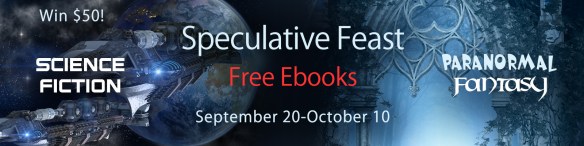
Looking to load up your Kindle or Tablet with a bunch of awesome FREE books? How about as many as 40 titles, all in speculative genres such as paranormal, science fiction, and fantasy? And the best of all, a chance to win a $50 gift card!

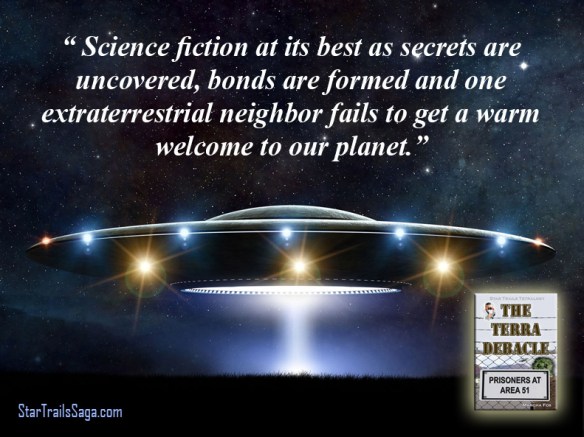
Now’s your chance to grab a copy of my latest, “The Terra Debacle: Prisoners at Area 51” for FREE! And remember that author’s cherish good reviews, so be sure to show your appreciation by leaving one at your favorite retailer. Check it out here!

Happy Reading!!

55368521 - 3d rendering of flying saucer ufo on night background

Attention, Authors & Readers!

faulknerquote

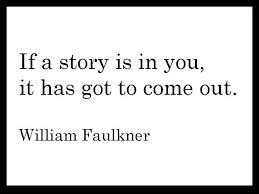
If there’s a story in you that’s not coming out, then you need to register NOW for RRBC’s 2017 Writers’ Conference and Book Expo!

Whether you’re an author or an avid reader, don’t miss out on this exciting event sponsored by Rave Reviews Book Club. The general public is invited, so whether or not you’re a member, right now, before you forget, mark your calendar for October 22-28.

THIS EVENT WILL HELP YOU:
*Get inspired and get to writing
*Market your work to avid readers
*Strengthen your craft of writing
*Network with like-minded individuals

It doesn’t matter if you’re a stark beginner or seasoned professional, there’s something for you! Get inspired, learn new writing skills, how to manage your time or social media, create a press kit, or dozens of other juicy topics. Enjoy browsing the Author Booths for books written by RRBC members as well as the many services available through the Vendor Booths. I’ll be attending several conference sessions, presenting one of my own explaining how you can use astrology to bring your characters to life, and also have an Author Booth to showcase my Star Trails Tetralogy and my latest release, “The Terra Debacle: Prisoners at Area 51.”

If you want a booth to showcase your own book(s), you need to be a member. So, if that’s what’s in it for you, now’s the time to join. (If you do sign up, be sure to mention my name  since we get brownie points for recruiting new members!)  Club services are vast, everything from a radio show and online magazine to a means to support fellow members through social media, reading, and reviewing. You can join here.

General Conference Info

Registration Info

Registration Packages & Pricing

Registration Page

Check it out! I’ll see you there!

#RRBC #RWISA #RaveReviewsBookclub #writers #amwriting

Amazon’s Review Policy Explained

jacksparrowattitude

Most indie authors have encountered, either personally or vicariously, some of Amazon’s gestapo review policies. When reviews are so important to a book’s ranking, it’s no wonder that restrictions are frustrating and often confusing. More than anything, I simply wondered what was behind it? Clearly Amazon’s goal is to sell product, so why would they institute rules that compromise sales? It seems that “fake reviews” should be recognizable to any intelligent person and be discounted with an eye-roll as opposed to throwing out the baby with the bath water and tossing legitimate ones.

Well, I attended a free webinar the other day entitled “3 Catastrophic Marketing Landmines That Can Get You Into Serious Hot Water With The FTC Today: And What You Need To Know… ” that provided a classic “Aha!” moment that explained what’s more than likely behind Amazon’s review policy.  If you hurry, you can listen to it until June 4, 2017 here. [NOTE: If you should join their program, note that I am NOT an affiliate and will NOT receive any compensation. Rather, I’m sharing it because I feel it’s information that others can benefit from as I did.]

So what’s the deal? Why is Amazon being so ornery about reviews? Not surprisingly, it’s none other than our friend (?) the US Government, more specifically the Federal Trade Commission, a.k.a. FTC. Like the IRS, this is another government agency you don’t want to tangle with. They have strict rules regarding deceptive testimonials, which includes whether there was any material compensation involved; in other words, a paid affiliate needs to be disclosed, with what constitutes payment a somewhat grey area. Deceptive testimonials, another no-no, can obviously include reviews from friends and associates who may claim something is the best thing since the cell phone when in reality it’s not. We’ve all read books from time to time that had multiple 5-star ratings that were clearly undeserved. So, being compensated for a review in some manner or an inflated testimonial that is unlikely to represent the opinion of others are to be avoided.

In other words, the bottom line is Amazon is covering their butt against consumer complaints to the FTC, which is the prudent thing for a business to do. If you have a website where you offer products to consumers, there are various alligators in the water regarding disclosure with which you, also, should be aware. As with any government regulation, ignorance of the law is no excuse and failure to comply can get you into serious trouble. All authors need to be aware of such regulations, especially if they have a website where they have affiliate links or sell their own books.

But my main point here is that Amazon is not doing this to make our lives difficult, but to protect their interests and comply with government regulations. It’s no wonder they ignore our complaints since we certainly don’t wield the punch of Uncle Sam.

That said, I can’t help but wonder what the FTC would do if authors complained about the way Amazon handles trolls?  Undoubtedly it’s covered in our contract to their benefit, but as our sales agent, if they allow trolls to jeopardize our sales, it would make for an interesting conversation….