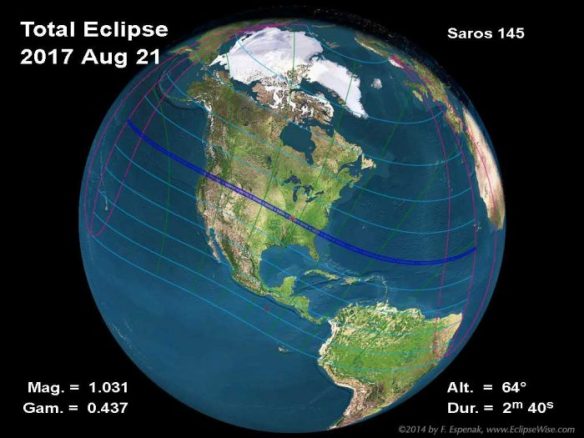
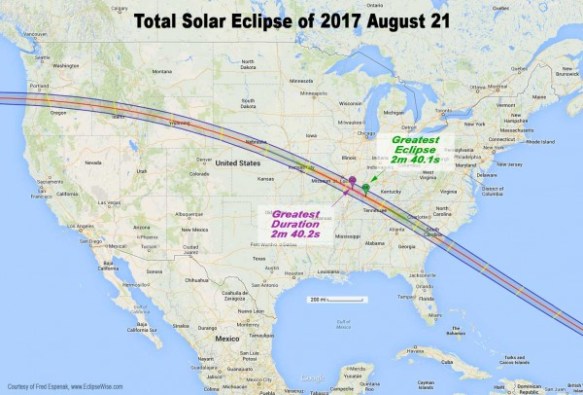
If you haven’t made plans yet, now’s the time. All you need to know about the 1st total solar eclipse visible from the contiguous U.S. since 1979, from eclipse master Fred Espenak.

If you haven’t made plans yet, now’s the time. All you need to know about the 1st total solar eclipse visible from the contiguous U.S. since 1979, from eclipse master Fred Espenak.
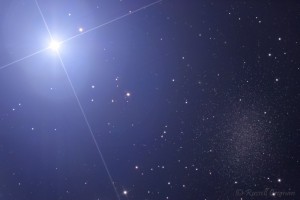
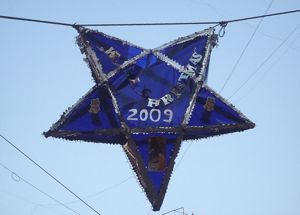
There are some great books out on this subject. I lean toward the planetary conjunction theory since the Magi were astrologers and could have interpreted its meaning.
—–
Was there really a star that led the 3 wise men to Bethlehem?
Source: Was the Christmas Star real?
If you’re used to the ease of uploading your book files to Create Space but want to expand your options by getting on with Ingram-Spark, these steps can save you a lot of headaches. Ingram-Spark is MUCH pickier about files and trying to figure out what they want yourself is a real headache. These steps can keep you out of a rubber room.

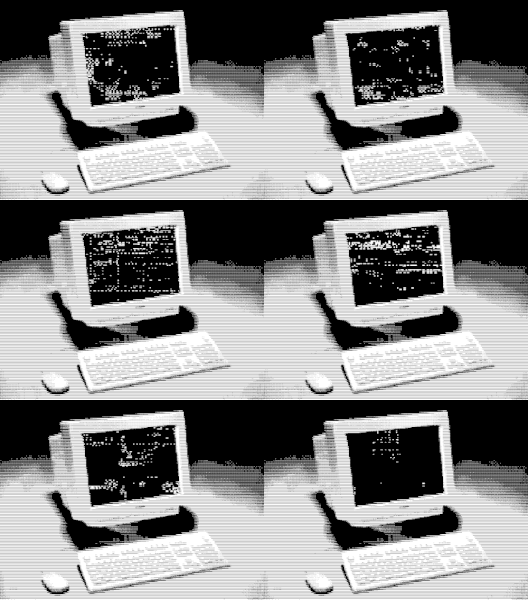
 our member/authors at Fresh Ink Group. These steps are for black-and-white interiors For color interiors, just skip the steps related to grayscaling. The main goal of this method is to fully control the specs of images by replacing the place-holders in the distilled file with processed images using the CMYK standard PDF/X-1a: 2001 with no color profiles in either…
View original post 384 more words
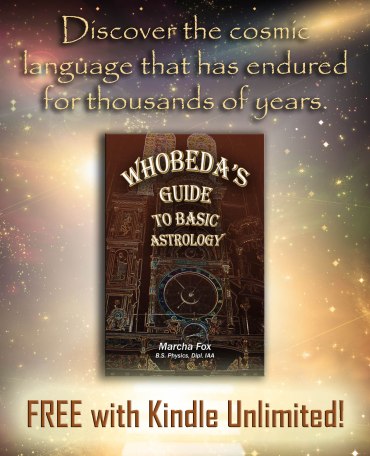
If you’ve always wondered whether astrology works or what all that sign, house, and aspect stuff means, this is the perfect chance to find out for FREE until December 11! This is the book I wanted when I was first learning about it.
The Kindle version is always FREE if you have Kindle Unlimited. If you’re a beginning student of astrology or an instructor teaching the basics, this book covers the material in an easy to follow manner.
What readers are saying about Whobeda’s Guide:
“A user-friendly introduction to a field of study that goes back to the dawn of man.”
“If you have no clue about cusps, rising, or what a fixed or mutable sign is, then you need to read this book.”
“Fun, witty and informative. . . An Absolute must read!”
“Five stars only because I can’t give it a hundred!”
“Written with wit and candor, this book is a must have for beginners as well as seasoned professionals.”
“Like sitting in the kitchen with a dear friend as she shares her delicious astro insights!”
Get your copy at one of the outlets below:
Click here to get it FREE until December 11th
Looking for the perfect gift for the person who has everything? Get the print version for $15.95 here
Or better yet, get the print version from the CreateSpace eStore and use Discount Code 4KCHSKEW to get 20% off!
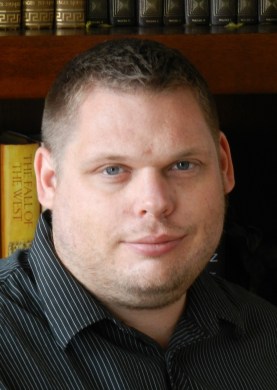
MF: As a self-declared history buff, do you recall what first drove your interests backward in time?
SJ: I have been fascinated by history for as long as I can remember. As a very young boy I remember my father and grandfather spending hours with me playing with toy soldiers and telling me stories from history. My grandfather made a replica warship out of a tea trolley with sections of broomstick for cannons and a hidden cassette player inside which played ‘Hearts of Oak’. He also built a replica Saturn V and a mock up of the surface of the moon which covered the entire dining room table and taught me about the space race. My parents took me all over the place to castles and museums and my Mum, who also loves history, encouraged me to read historical books from an early age. I also had a wonderful history teacher, Mr Bastable, who could make even the dull bits of history interesting. With all those great influences I was always going to grow up loving history.
+++
MF: It certainly sounds as if you were primed by your upbringing to love history! Have you travelled to many of the locations relevant to your books? Which one(s) inspired you the most?
SJ: I have been fortunate to have travelled to lots of great historical sites around the world although there are still lots more on my list. Visiting Egypt and Rome whilst writing ‘The Battles are the Best Bits’ were hugely inspirational and I incorporated my memories of those visits into the book. There is something very powerful about standing on the very spot where great events happened and you can feel the resonance of them somehow. Sadly most of Fall of Empires takes place in Syria and Iraq which are not very tourist friendly these days. I have been to Istanbul which also features heavily, though apart from the Hagia Sofia and the walls there is not much left of the old Byzantine Constantinople.
+++
MF: That is so true about historical sites. You can definitely feel their complexity. When you read about an historical period, do you typically picture yourself living during that time?
SJ: I think you have to. Not in a fantasizing sort of way but in terms of your outlook, your values and your expectations. I don’t think you can write objectively about history either as fiction or non-fiction unless you take a step back from your 21st century based values and judge people and events by the standards of the time in which they occurred. In ‘The Battles are the Best Bits’ I found myself justifying acts of slaughter which today would be judged as war-crimes as perfectly reasonable actions under the circumstances. The ancient world was a much more violent place than the modern world and human rights and the value of human life were seen very differently. This was a world in which the destruction of an entire city and the slaughter, rape and enslavement of its population was a legitimate act of war. To write about this period effectively you have to remove yourself somewhat from the here and now. Dealing with these events objectively I think gives them even greater impact in the mind of the modern reader.
+++
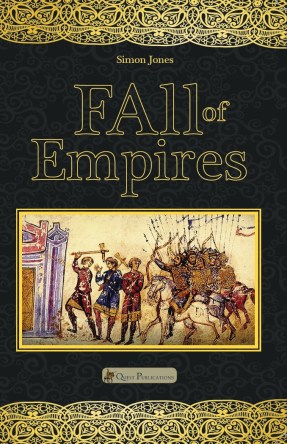
MF: The context is definitely a huge factor that takes some effort to understand. Even today cultural differences prevent many from understanding others’ actions.
Your book “Fall of Empires” earned over 280,000 reads on Wattpad, which is amazing! At what point did you decide to take the plunge and publish your work as a print book?
SJ: In some ways I regret the decision as there is no doubt that by sharing your work freely you reach far more readers than you do by charging money for it. I decided to ultimately publish the book as a result of the positive reaction to it from readers and from the site administrators who obviously see a lot of books. So I was confident it was of sufficient caliber to warrant publication. I already had one book in print so was under no illusions how hard it is to reach readers in such a saturated marketplace. I have a very limited appetite for self promotion however so I only have myself to blame.
+++
MF: I totally understand your attitude toward self-promotion since I feel much the same way. Writing is the fun part, marketing, not so much, though I do enjoy helping others promote their work.
As a history aficionado, do you have a favorite historical figure? If so, why?
SJ: You would probably expect me to name a military figure from the ancient world but I would say my favourite historical figure is Charles Darwin. His contribution to science goes without saying but his journals reveal an adventurous and daring spirit. During the voyage of the Beagle Darwin undertook numerous arduous journeys into the interior. He braved hostile natives, inhospitable terrain and even ventured into a warzone in pursuit of scientific enquiry. I think a lot of people picture him perhaps getting off the ship from time to time and strolling around with his magnifying glass but he was a real man of action. He was also a genuinely decent human being with little time for the superiority or snobbishness that characterized Victorian men of his class and would happily break bread with anyone he encountered on his travels no matter how humble their station. He abhorred the slavery which he witnessed in South America and vowed never to return to any slave state.
+++
MF: Darwin was truly one of history’s great figures. Few are familiar with, much less appreciate all he did or the man he was. And speaking of familiarity, most people are acquainted with the adage, “Those who fail to learn from history are doomed to repeat it.” Which lesson do you think today’s leaders are failing to learn?
SJ: I think that the Middle East is the prime example of failure to learn from history. Time and again western governments have imposed clumsy solutions on the region which fail to take account of centuries of conflict and complex divisions understood by only a handful of experts. The poor handling of the Arab Spring and the rise of Isis are just the latest examples. Events of a thousand years ago or more still resonate in the region alongside more recent tensions and no doubt once the latest Iraqi crisis and Syrian civil war are finally brought to a close, another imperfect solution will be imposed by the west and Russia, adding another layer of complexity and more seething discontent.
+++
MF: The Middle East has definitely been a problem area for millennia. It seems to me that much of the problem is that they are still stuck in the 7th Century culturally whereas the rest of the world has progressed. It’s impossible for us to understand what most modern westerners consider a barbaric mindset.
I find it interesting that you have a degree in Genetics and worked for the Forensic Science Service. Have you ever had your DNA traced to see if you’re genetically connected with any of the areas that draw your interest?
SJ: I have not. To my knowledge my family has been traced back to Elizabethan times living as farm labourers and domestic servants in the south of England but that’s only one branch. It would be an interesting thing to do one day. I’d like to find out if I have a bit of Viking in me!
+++
MF: I’ve done some genealogy in the past and it’s definitely an advantage to be familiar with history when you’re trying to figure out where a family lived before they popped up somewhere, usually due to some migration due to events at the time, whether political or weather related.
While our cultural and genetic roots define our foundation, some historical figures such as General George S. Patton believed that he had been a warrior in a previous life. Have you ever had any experiences (e.g. deja-vu) that gave you the impression that you had actually lived during another specific time?
SJ: No. I don’t believe in previous lives but when I visit ancient places, where so much has gone before, I do get a sense of feeling the history of the place. Places like the Roman Forum, the Valley of the Kings, the Terracotta Army. There is something special in the air or in the stone that makes the hairs on your arms stand on end. That’s the closest I’ve got to something like that. I had a similar experience at Dachau too, for obviously different reasons.
+++
MF: Those who have never visited a place that had a significant role in history can’t understand that. It’s definitely almost tangible, the echoes of past events that cling to an area.
Have you started work on your next book? Tell us about it and what inspired you to write it.
SJ: I am not writing a present as I decided to give up my job and become a teacher and sadly no longer have time for writing. That same love of telling stories and passing on knowledge is what made me want to go into teaching however and so I get the same satisfaction from planning and delivering lessons. I’m teaching science but I try to get a bit of history into my lessons wherever I can.
+++
MF: That’s awesome! I’m sure you’ll make a fabulous teacher. So many students need some background to put what they’re learning into context, i.e., some additional information that has meaning and makes it relevant. When I was a child in school, the emphasis in history class comprised memorizing dates and places, which was mighty boring. I didn’t care about it at all until I got into genealogy.
Balancing a career of any sort with writing is always a challenge. Which part of the writing process is your favorite?
SJ: The research. The writing really is an outlet for the learning in my case. Whilst most probably see research as a means to end, for me the writing is the justification for the research. It gives it a purpose beyond learning for its own sake and a vehicle to share that learning. Whilst that vehicle was previously writing, now it is teaching.
+++
MF: I’m sure your passion for history and sharing it will make you a great and memorable teacher. No matter what subject you’re teaching, it has a history, especially science, which ultimately impacts society in important ways.
Do you have any future book ideas outside the historical fiction realm? In other words, do you have any real-life experiences in forensics that would lend ideas to mysteries or thrillers?
SJ: I think that market is well and truly saturated, so no, it doesn’t interest me. The biggest crime in my forensic experience was the closing down of the British Forensic Science Service and the biggest mystery is how it was allowed to be so badly run for so long. Someone should write a book about that, but it won’t be me.
+++
MF: Sounds like a wise decision. Do you have a favorite author or favorite book of all time, perhaps one that inspired you to become an author?
SJ: There are few books I have read more than once and I can only think of one I’ve read more than twice and that’s The Power of One by Bryce Courtney. It is truly uplifting and got me through some very lonely times in my life. The film didn’t do it justice.
+++
MF: Thanks for the interview, Simon! I’m sure your work will benefit many as will your foray into teaching and sharing your vast knowledge and love for this very important subject.
Simon’s book is available at the following places:
More about Simon Jones
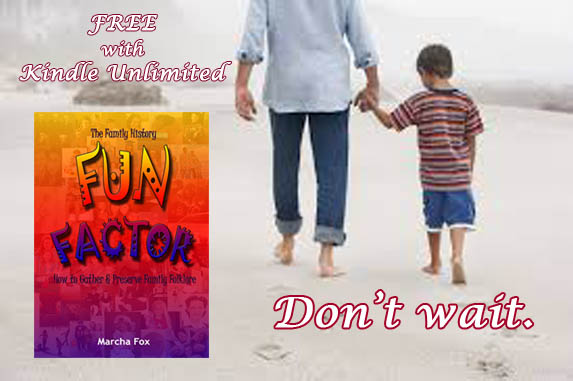
If you’re into memoirs, scrapbooking, genealogy, or family history, don’t miss out on the chance to download “The Family History Fun Factor” for FREE until December 6 and always free with Kindle Unlimited.
Memories worth keeping should be preserved. Here’s how! All it takes is your smart phone!
$4.95 Print Version Get 15% off with Discount Code CVJXJUUC at Create Space!
Book Bubble Excerpts: http://www.bublish.com/bubble/view/2553
This has got to be one of the stupidest things I’ve ever heard of in my life. Only California could come up with something so utterly stupid. Of course all the millions of cars and other pollutants have nothing to do with it. Right.
—-
Source: California Targets Dairy Cows to Combat Global Warming
Excellent points, all around. In the past several years, the “squeaky wheels have gotten the oil.” Maybe now it’s time for the rest of us.
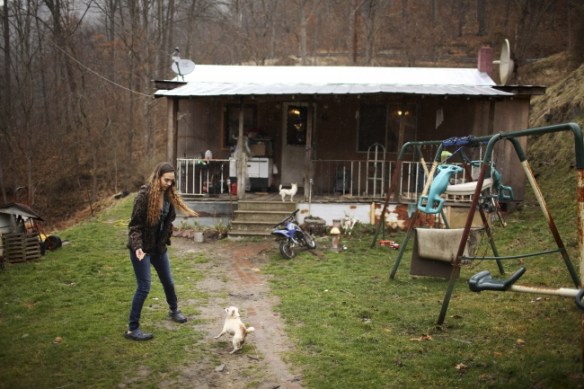
Over the summer, my little sister had a soccer tournament at Bloomsburg University, located in central Pennsylvania. The drive there took about three hours and many of the towns we drove through shocked me. The conditions of these towns were terrible. Houses were falling apart. Bars and restaurants were boarded up. Scrap metal was thrown across front lawns. White, plastic lawn chairs were out on the drooping front porches. There were no malls. No outlets. Most of these small towns did not have a Walmart, only a dollar store and a few run down thrift stores. In almost every town, there was an abandoned factory.
My father, who was driving the car, turned to me and pointed out a Trump sign stuck in a front yard, surrounded by weeds and dead grass. “This is Trump country, Tori,” He said. “These people are desperate, trapped for life in these small towns…
View original post 1,332 more words
Not only “No” but “Hell, no!”
Fracking has been shown to not only pollute water sources, but cause earthquakes and do various other forms of severe environmental damage. With the progress that’s been made with alternative energy sources, there is no excuse for it. If Big Oil has any sense, they need to direct their resources in other directions. Meanwhile, we can tell them what we think. This one hits close to home for me, within the same state and it involves a lake. I live across from one myself and it horrifies me to think of them doing such a thing across the street!
—-
It seems so simple. There are some places you just shouldn’t frack. Like under or near water supplies. Right?
Source: Stop Fracking Under Our Water
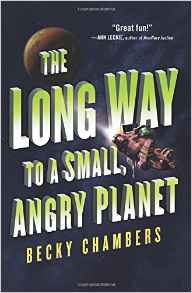
Join the multi-species crew of the tunneling ship, Wayfarer, for a wild ride through intergalactic space.
This story started out a bit slowly, but when all was said and done, I absolutely loved this delightful spaceopera. If a book can make me both laugh and cry, plus keep me entertained inbetween, it will invariably earn five stars. I would actually give this one more, if it were possible. It has definitely earned placement on my list of favorites.
The story is character driven and thus maintains a steady pace as you come to know each of the characters that comprise the crew of the Wayfarer. If you’re looking for a fast pace, nail biting suspense, and unending action, then you’ll probably be disappointed. This is not to say there aren’t a few exciting scenes, because there are, but much of the suspense is more subtle. If you want to be sucked into a story so you feel as if you’re living it, then you’ll not be disappointed.
Each crew member is not only a distinct individual, but many represent an entirely different species whose appearance, behavior, quirks and cultures were exceptionally well-developed. Indeed, I felt as if I were a member of this diverse crew, observing the relationships and sometimes culture clashes between them, as I have done in the workplace. (I swear some of the people I worked with at NASA were a different species.) Those you spend the day with at work often become family and, of course, onboard a space vessel where you’re together 24/7, this will be even more pronounced.
The author captured this feeling of comraderie between coworkers, some friends, some not, in a detailed, often heart-warming manner. You felt as if you knew each one, their individual personality and secrets gradually coming out as the story progressed. Their cultures and backgrounds were developed in a fascinating and imaginative way, including unique family structures right down to physical issues such as the discomfort of molting.
A major component of any workplace is its environment and the technical aspects of maintaining an aging spaceship as well as its function, to drill wormholes to connect different parts of the Universe, were addressed in a convincing as well as feasible manner. I’m quite particular about the technical side of science fiction and feel strongly that speculation into advanced technologies needs to be believable. It should not violate the known laws of physics, even if the author speculates on those we haven’t yet discovered. This was done in an outstanding manner that never jerked me out of the story as some have when they describe situations that were totally impossible, such as F-15s operating in the space environment. Such a faux pas in a story makes me growl.
I find such mistakes nothing short of sloppy writing at its worst. It’s not that hard to do a little research on Wikipedia and, when you get beyond your level of expertise or comprehension, that’s where experts and beta readers come in. Accuracy enhances a story and adds to its credibility, which even stories in the fantasy genre need to maintain, and often provides additional ideas for plot twists. As far as new technologies are concerned, it’s better to not explain how it works at all, rather than get it entirely wrong or inconceivable. This story handled that aspect beautifully as well.
By the time I finished this book I felt as if I’d done a tour onboard the Wayfarer. I was emotionally invested in its crew and comfortable with its setting. In some respects, the sense of place reminded me of the Alien movies, though without the gore, which was replaced with such things as bureaucratic response coming at glacial speeds, which can be even more frightening.
If you’d like to immerse yourself in the future and get some idea what it might be to work on a spaceship, day in, day out, and mingle with those of not only other races but other species, then I can’t recommend this book highly enough. I look forward to its sequel with great anticipation.
You can pick up your copy on Amazon here.


 Marcha's Two-Cents Worth