Unknown's avatar

About Marcha's Two-Cents Worth

I'm a science fiction author of the Star Trails Tetralogy, retired after two decades working at NASA, defected from my physics training to become a professional astrologer, and various other acts of rebellion. More recently, I've teamed with Pete Risingsun in writing "The Curse of Dead Horse Canyon: Cheyenne Spirits" which was released in July 2020 with more to come.

WATCH “RWISA” WRITE Showcase Tour – Day 6

RWISA TOUR (1)

Wendy Scott

Navigator

by Wendy Scott

Luke’s body whirled through the portal in a kaleidoscope of starlight and rainbows. Burnt ozone stung his nostrils, and his stomach roiled as if live dragonflies flitted inside. He clutched his grandfather’s palm tighter, the only connection anchoring them together while they spun into the void, guided by the compass in his grandfather’s other hand.

“We’re here.” His grandfather’s words whistled with wheeziness.

He released Luke and turned away, pocketing the compass, but his old man’s movements weren’t quick enough to hide the tremors or his shortness of breath.

A mountain breeze, tinged with smoke ruffled the tussock grasses underfoot. In the valley below, Luke pinpointed a chimney on a cluster of shacks beside fenced paddocks. Had the old man’s sense of direction faded and cast them adrift?

“Follow me.” His grandfather rolled his shoulders back, lifted his head high, and led the descent.

Mindful of their journey’s mission doubt dragged at Luke’s feet. At only twelve, would he be found worthy? He didn’t want to think about his grandfather’s declining health if their bid was rejected.

Metallic scent tainted the air as they skirted past the dwellings; a one-room cottage, barn, and a smithy. Orange coals smoldered on the forge, hammers, and tongs lined up in military precision, but the pockmarked leather apron hung empty from a hook on the open door.

Without pause, his grandfather guided Luke out the back to the horse corrals. A bear of a man with arms like anvils leaned against the fence. Leather pants and knee-high boots sheathed his legs, but his chest was bare except for a star patterned tattoo, staining his chest muscles indigo and cobalt. At their approach his head swiveled, snaring the pair with a deep ocean gaze. Dryness etched Luke’s throat.

“Navigator, so many years have passed, I feared you would not return.”

Luke’s grandfather bowed his head. “Farrier, events have been unkind, but I keep my promises. My grandson had agreed to assume the responsibility in the place of his father who died when he was a babe.”

The men spoke as if Luke were a phantom, but he remained silent, remembering his grandfather’s instructions only to speak when asked a direct question by the otherworld farrier.

Grass scented warmth huffed through Luke’s hair. A midnight coated horse towered above his head. A white star marked the stallion’s forehead.

Luke clambered up the railings, but he still had to stretch to trail his fingertips along the horse’s snout. His breath caught when he gazed into the depths of the creature’s starlight eyes.

Firm fingers clasped Luke’s shoulder, and the farrier bowed towards the steed.  “Kasper approves of you. Come inside.”

The temperature in the smithy scorched the hairs inside Luke’s nose, and sweat trickled beneath his tunic, but the farrier worked the bellows until the coals combusted into flames. Next, he sprinkled a handful of sand into the hearth, and the fire danced into violet and malachite hues.

“You understand, old friend, without the enchantment your life span will be reduced to mortal years?”

My grandfather nodded.”These old bones grow weary, and the pathways are becoming muddled. My time is past. Luke is young, but he is pure of heart. ”

The farrier studied his friend for a moment before he reached out with his palm. “Navigator, of your own free will do you relinquish your powers to your grandson?”

The old man answered by dropping his compass into the farrier’s outstretched hand. “I do.”

The farrier’s otherworld stare scrutinized the boy, and although the being didn’t touch him, a prickling sensation rippled up Luke’s spine. After several heartbeats, the farrier inclined his head. “Your soul is free of darkness, but perhaps you are too young yet for any temptations to have challenged your values.”

“He’s a good lad. I vouch for him and will guide his path.” His grandfather squeezed Luke’s shoulder.

Calloused fingers gripped Luke’s chin. “Are you sure you want this? It’s not too late to back out and live a normal life. Be warned, once you accept you are bound for life. Each time you enter here seeking my help a non-negotiable toll must be paid.”

Before crossing over doubts had plagued Luke’s thoughts, but after tasting magic, he couldn’t settle for a dull life on the farm when his world had been opened to the lure of other realms.

Luke moistened his lips. “Navigator blood runs in my veins. I’m young, but I’m ready.”

The farrier released him. “Do I have your solemn vow you will only guide your passengers by the way of the light?”

Heart thundering, Luke focused on the compass. “I swear I’ll follow the true pathways.”

Light glinted off the chain as the farrier dangled the compass into the sparking coals. “Hold out your hand.”

Luke flinched, expecting his skin to sizzle when it touched the metal, but the compass was cool. He didn’t feel any different. Had the transfer worked?

The farrier clasped forearms with the older man. “You owe me one last favour, but I will redeem what’s due at another time.”

“As always it will be an honour to serve.” Luke’s grandfather stepped away.

“Navigator, peer into the fire.”

Several moments passed before Luke responded to his new title. Within the flames, he spied a young woman’s face, whose striking features seared into his memory.

“One day she will seek your skills, and when she does you must bring her to me.” The farrier crossed his arms.

Questions burned in Luke’s mind, but he’d been schooled on the protocols, so he suppressed his curiosity, and lowered his eyes. “As you command.”

The farrier ushered them into the yard and bid them farewell. “Keep your promises, follow the light and your direction will always be true.”

Outside Luke paused, blinking. A glittering path lit the way up to the portal.

Unshed tears gathered in his grandfather’s eyes. “The navigator’s sight is now hidden from me.”

Grasping the compass in one hand, Luke held out his other hand. “Come grandfather, I will guide you home.”

***

(Navigator is a prelude and companion scene to Fire Hooves – yet to be released by Wendy Scott).

Thank you for supporting this member along the WATCH RWISA WRITE Showcase Tour today!  We ask that if you have enjoyed this member’s writing, to please visit their Author Page on the RWISA site, where you can find more of their writing, along with their contact and social media links, if they’ve turned you into a fan.  WE ask that you also check out their books in the RWISA or RRBC catalogs.  Thanks, again for your support and we hope that you will follow each member along this amazing tour of talent!  Don’t forget to click the link below to learn more about this author:
Wendy Scott’s RWISA Author Page

WATCH “RWISA” WRITE Showcase Tour – Day 5

RWISA TOUR (1)

Gwen Plano

Love at First Sight

By Gwendolyn M Plano

“It doesn’t seem real. It just doesn’t seem real.” Mom muttered as she ran her hand over the curves of dad’s headstone. Sighing deeply, she stared blankly into the horizon.

After a few minutes, she turned and faced me. “I tell myself that it must be real.” She seemed to want my approval. “The stone says we were married 70 years. It must have happened; I must have been married. But, but…why can’t I remember?” She searched my face for answers.

Stooped from the burden of years now elusive and sometimes vacant, mom held my arm while she walked to either side of the monument.

“I saw him in a dream. Did I tell you that?”

“No, mom, I don’t think you did.”

“He was young, like when we first met.”

“Really? Could you tell me about how you met?”

“How?” Mom’s eyes darted to and fro as she struggled to answer. Then, as though the curtains lifted, she responded.

“Yes…yes, I can tell you how we met.”

“Let’s sit here, mom.” I led her to a cement bench under a tall oak tree near dad’s grave. “Now tell me how the two of you met.”

Mom took a deep breath and began. “It was during the war. I remember it now. It was 1944. There were posters in our high school which asked us to sign up to work at the Consolidated Aircraft factory in San Diego. They needed help building B-24 bombers. We called the bombers the Liberators. My sister and I and several of our girlfriends decided we wanted to help our country. Most of the boys in our class were enlisting in the army or navy. We wanted to do our part too.”

“Like Rosie the Riveter?”

“Oh, yes! We all wanted to be Rosie. Your grandparents didn’t much like the idea, but they knew the families of the other girls, and since we’d be living together and would watch out for one another, they finally agreed. After all, it was the patriotic thing to do.”

I couldn’t help but smile at the thought of mom being Rosie and asked where she lived.

“We lived with Aunt Lena on India Street in San Diego. She put in bunk beds for us. At night, we’d wash out our clothes and tie the pieces to the bedsprings so that they could dry overnight.”

“When we arrived at Consolidated, they gave each of us a uniform – blue pants and jacket. And, we had classes for a week or two. Most of us were assigned the job of riveting. It’s hard to believe, but there were about 20,000 women working at the factory. The assembly line was a mile long, and believe it or not, we built about nine bombers a day. Isn’t that amazing?”

“That is amazing, mom.” Pride glowed from mom’s face, and I couldn’t help but feel proud of her as well.

“I was assigned to the wings. I hate heights, but I’d climb on top of those wings and pretend I was sitting on the hood of a car. I didn’t get afraid that way. One day, when I was sitting up there, holding a riveting gun, your dad came by.”

“Hey,” he said. “What’s your name?” I thought I might be in trouble, but he smiled, so I smiled back.

“It’s Lauretta.”

“Well, Lauretta, you’re doing a great job. If you need anything, let me know. My name’s Jim, and I’m the foreman for this area.”

I put my arm around mom’s shoulder. “My goodness, mom, you were on the wing of a bomber when you met dad?”

“Sounds funny, doesn’t it? But, yes, that’s the first time we talked. I didn’t pay much attention to him, but my sister would whisper to me, “There he is again. I think he likes you. He keeps looking this way.”

Mom lowered her eyes and giggled. “Of course, I didn’t believe her.”

After pausing a bit, she continued. “Your dad started walking home with us in the evening. He lived further up the hill from us, so it wasn’t out of his way. Mind you, I was wearing the company uniform and had my hair in a bandana, so I was hardly a beauty.”

“Anyway, one day he asked if I’d like to come up to his place. And, I was stupid and said okay. That’s when I learned about the facts of life. You know, sex.”

“You didn’t know before then, mom?”

“No, but he taught me that night.” Mom giggled and put her hand on her face. “He wanted to get married right then. But, I told him no, he had to talk to my parents. We needed to do it right. Besides, I hardly knew him. There were a lot of shot-gun marriages those days. We all thought the end of the world was coming, and well, young lovers didn’t hold back.”

“So, you and dad became lovers?”

“You know the answer to that, don’t you? When I didn’t have my cycle, I knew I was pregnant. Your dad was elated and didn’t hesitate to talk to your grandparents. Of course, I was ashamed. But, I want you to understand something. You might have been the reason we married, but you were not the reason we stayed together for 70 years.”

“Did you love him, mom?” The question came out before I could filter it.

“I did, I just didn’t know I did. Your dad would tell anyone who would listen, ‘When I saw Lauretta on the wing of a B-24 bomber, I knew that she was the one for me.’ He’d say it all the time, ‘She’s the one for me!’” Mom giggled as she thought about this story. “Your dad always said it was love at first sight. But it wasn’t that way for me.”

“What do you mean by that, mom?”gwenPlanographic

“Well, love is a strange word, isn’t it? Your dad seemed to know from the first time he saw me that he wanted to marry me. I didn’t feel that way. I think my focus was romance or dreams. And, your dad wasn’t the wooing type.”

“I believe I fell in love with him after you were born. He thought you were the most beautiful baby in the whole world. In fact, I think he was happiest when he was holding you. He’d sing to you and rock you to sleep every night.”

She dropped her head, and tears rolled down her cheeks. My tears fell as well.

“He was a good man, a faithful man. Did I tell you his promise?”

I shook my head, and said, “no.”

“You know that he grew up hungry, right? During the Dust Bowl, his family barely survived. In fact, two of his sisters died.  Well, your dad promised me that his children would never go hungry. He would make sure of it. And, he did. He worked two jobs most of our marriage, and you kids were never hungry.” She paused and looked into my eyes.

“Your dad kept his promises.”

Mom grew silent. Her face turned from animated to expressionless, and I did not know what to think. She whispered something that I had to ask her to repeat. She sighed and looked at me again.

“It just doesn’t seem real.”

~ ~ ~

Thank you for supporting this member along the WATCH RWISA WRITE Showcase Tour today!  We ask that if you have enjoyed this member’s writing, to please visit their Author Page on the RWISA site, where you can find more of their writing, along with their contact and social media links, if they’ve turned you into a fan.  WE ask that you also check out their books in the RWISA or RRBC catalogs.  Thanks, again for your support and we hope that you will follow each member along this amazing tour of talent!  Don’t forget to click the link below to learn more about this author:
Gwen Plano’s RWISA Author Page

WATCH “RWISA” WRITE Showcase Tour – Day 4

RWISA TOUR (1)

Beem Weeks

Wordless

“What’s that word say?”

“That’s an easy one, Daddy. Just sound it out.”

Levi Bacchus can’t read. 36 years old, and he’d never learned the meaning of a single sentence.

“I just ain’t cut out for this, Jamie Lynn.”

The girl’s countenance dropped in disagreement—just like her mother, that one.

“So, you’re a quitter now?” she bellowed, sounding too much like the woman who’d walked out of their lives two years earlier.

Levi took offense. “Mind your manners, Missy. I ain’t never been called no quitter.”

“Reading is something everybody should be able to do, is all I’m saying.”

“It’s easy for you,” Levi argued. “You’re just a kid, still in school. You have teachers telling you what to do and how to do it. I’m just too old for learning.”

The girl narrowed her gaze, jabbed a finger into the open book. “From the beginning,” she demanded.

His heaving huff meant he’d do it again—if only for her sake.

Words formed in his head before finding place on his tongue. Some came through in broken bits and pieces, while others arrived fully formed and ready for sound.

Jamie’s excitement in the matter is why he kept trying. Well, that and the fact he’d long desired the ability to pick up the morning paper and offer complaint or praise for the direction of the nation. All those people in the break room at the plant held their own opinions on everything from the president to the latest championship season enjoyed by the local high school football team.

“That’s good, Daddy,” Jamie said, patting her father on the arm. “That’s really good. You’ll be reading books before too long.”

A smile worked at the edges of his lips, refusing to go unnoticed.

“I’d like that, Sweet Pea.” That’s all he’d say of the matter. If it came to that, well then, he’d have accomplished something worth appreciating.

Levi harbored bigger notions than merely reading books. When a man can read, he can do or be anything he wants to be. His own father often said a man who can’t read is forever in bondage. How can a man truly be free if he cannot read the document spelling out the very rights bestowed upon him by simple virtue of birth? No sir; being illiterate no longer appealed to him.

Of his immediate family—father, mother, two older brothers—only Levi failed to attend college. Oh, he graduated from high school. Being a star quarterback will afford that sort of luxury. But when those coaches from the universities came calling, low test scores couldn’t open doors that promised more than a life spent in auto factories.

He’d seen a show on TV about a man who’d been sent to prison for five years for armed robbery. While there, this man learned to read, took a course on the law, and became a legal secretary upon his release. Eight years later, he’d earned a law degree and opened his very own practice.

Levi didn’t see himself arguing cases in a court of law—defending criminals most likely to be guilty just didn’t appeal to his sense of right and wrong. What he did see, however, is the need for a good and honest person to run the city he’d forever called home.

“Think I could be mayor?” he asked his daughter.

Jamie Lynn always grinned over such talk. “Everybody has to have a dream, Daddy.”

It’s what she always says.

Everything begins with a dream.

She gets that part of her from her mother.

“Once I can read without stopping to ask questions,” he mused, “maybe I’ll throw my hat into the ring, huh?”

“There’s nothing wrong with asking questions,” she answered, weaving wisdom between her words.

*      *      *

She’d been a girl scout, his daughter—daisies and brownies before that. It’s the other girls who bullied her out of the joy that sort of thing once offered. Straight A’s have a way of making others feel inferior, even threatened.

But Jamie Lynn isn’t the type to pine or fret. She chose to tutor—and not just her father, either. Kids come to the house needing to know this and that among mathematics or English or science. Her dream? To be a teacher one day.

And she’ll accomplish that much and more.

Her mother had that very same sense about her as well. She knew what she wanted in life, and cleared the path upon which she traveled.

High school sweethearts they’d been, Jamie Lynn’s mother and father. She’d been the pretty cheerleader, he’d been the All-American boy with a cannon for an arm. She went to college, he didn’t.

But she returned to him, joyfully accepting his proposal for a life together. Her degree carried her back to the high school from which they’d both graduated. This time, rather than student, she became teacher—American History.

Levi went to work building Cadillacs in the local plant. It paid well, offered medical benefits and paid vacation time. Life settled into routines.

Then came their little bundle. This didn’t sit well with the newly-minted history teacher. No sir. It’s as if Levi had intentionally sabotaged his own wife’s career in some fiendish plot to keep her home.

Words of love became “stupid” and “ignorant” and “illiterate ass.” She walked out one evening and never came back to the home they’d built together.

A former student, he’d heard—five years her junior. They’d ran off together, supposedly making a new home somewhere out west.

Levi didn’t challenge it. He received the house and the kid in exchange for his signature on those papers he couldn’t even read.

Jamie Lynn, she’s the light that shined in his darkness, showed him there’s still so much more living to be done. And learning to read, well, that just added to the adventure.

*      *      *

The night came when he read an entire chapter from one of Jamie Lynn’s old middle school books—straight through, unpunctuated by all those starts and stops and nervous questions. By the end of the month, Levi had managed the entire story—all 207 pages.

“We have to celebrate, Daddy,” she insisted.

It’d been the silly draw of embarrassment that twisted his head left and right, his voice saying, “No need to make a fuss, Sweet Pea.”

But fuss is only the beginning. “Dinner and a movie,” she ordered. “Then we’ll stop off at the mall and pick out a few books that you might like.”

There were stories he recalled from his boyhood; books other kids clutched under their arms and took for granted. Stories that stirred so much excitement in those young lives.

They’d belong to him now.

“You’re finally blooming, Daddy—just like a flower.”

And so was his daughter.

A teacher in the making.

~~~

Thank you for supporting this member along the WATCH RWISA WRITE Showcase Tour today!  We ask that if you have enjoyed this member’s writing, to please visit their Author Page on the RWISA site, where you can find more of their writing, along with their contact and social media links, if they’ve turned you into a fan.  WE ask that you also check out their books in the RWISA or RRBC catalogs.  Thanks, again for your support and we hope that you will follow each member along this amazing tour of talent!  Don’t forget to click the link below to learn more about this author:

Beem Weeks’ RWISA Author Page

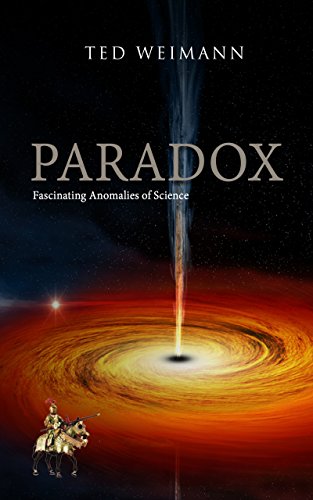
Interview with Ted Weimann, Author of “Paradox: Fascinating Anomalies of Science”

webTedTed Weimann is obsessed with science and shares what he learns generously in his recent book, Paradox: Fascinating Anomalies of Science from Quest Publications. If you want a crash course on the hottest topics in science today, I highly recommend this book, as you can tell from my recent review. Ted’s enthusiasm and love of learning comes through in his writing, thanks to his ability to synthesize the information and then explain it in a way a person of average intelligence can understand.

Ted was gracious enough to grant me an interview, which gives us further insights into his brilliant mind and his ongoing quest for knowledge, fueled by his “Question Everything” attitude.


MF: What motivated you to compile Paradox’s rich collection of modern research?

TW: The thrill of learning about these fascinating topics.  I so thoroughly enjoyed the dark energy / center of the universe enigma over the years, that I began noticing other paradoxes.  They’re interesting.  For instance, who would have thought that France will experience a higher sea level rise than Iceland when the Greenland Ice cap melts?  But with the reduced gravitational attraction upon the North Atlantic Ocean because all Greenland’s ice mass is gone, and with the resulting glacial rebound, France actually will.

Something else I didn’t include in that section because I didn’t think about it at the time, is when that part of the North American Plate glacially rebounds, Iceland’s continental rift will likely increase.  As you know, Iceland is practically split in half because it straddles two tectonic plates that are moving apart from each other.  Its western half will experience some glacial rebounding when Greenland does.  Since its eastern half is on the Eurasian plate, that part of Iceland likely won’t, or if it does, will to a far lesser degree.  An increase in Iceland earthquakes may be in their future, perhaps even their volcanic activity will increase. We could talk all night about this one topic and all its implications.  Scientists could research it for years.  I find that pretty cool.


MF: Which part of Paradox is your favorite section?

TW: It’s changed over time.  First it was the section on dark energy.  And then it was black holes.  When I calculated the compression of a neutron star down to a black hole, I made mistakes.  Catching those mistakes was fun, and humbling.  And then I realized that the neutron star would start rotating faster than the speed of light.  Since I knew that this could never happen, I started researching the ways in which this violation of physics was avoided.  One of those ways is the decoupling of the magnetic field-lines when they cross the light cylinder.  I had never heard of a light cylinder.  That was another cool concept I got to research.

Plate tectonics made a run for the number one spot, but I’d have to say the chapters on the evolution and devolution of the human brain are my favorites.  So many questions remain unanswered.  Like how will our intelligence change in the future?


paradox

MF: Tell us about the research/facts presented in your book that surprised you the most.

TW: Probably the agricultural paradox.  I knew farmers produced more calories, yet had poorer nutrition than hunter gatherers, but I didn’t realize how much poorer their diets were.  I had always been led to believe that hunter gatherers lead such difficult lives compared to farmers.  And that’s not necessarily the case.

I also didn’t know that farmers used to live with their livestock.  Living in these cramped, filthy conditions is how their diseases evolved and became our diseases.  That was interesting.


MF: Do you have a particular source you trust more than others?

TW: The source I use the most, not necessarily for writing books, but for medical research, is pubmed.org.  I’ve been researching medical studies on their site since practically day 1.  But, as discussed in my chapter on the obesity paradox, the reliability of medical studies is far lower than it should be.  So, they’re not my answer to your question.

I’m sorry but, I don’t have any one source to hold up for you.  My thanks go to the majority of the experts that take the time to answer questions from me and I’m sure many other people.  Sometimes it was research for this book, but often I simply read about their research and had a question about it or its implications.  And most of these experts took the time to help me.  So, thank you to them.


MF: What do you think the next major technological breakthrough will be (that’s revealed to the public)?

TW: I might have to go with batteries.  I’ll be surprised if we don’t have vastly superior batteries 10 or 15 years from now.  And that simple advance will have profound changes upon the planet.  Think transportation, renewable energy, climate, and the lives of people around the world currently without power.  We’ll all benefit with that one, seemingly simple advance.


MF: If you were the one controlling the purse strings to a big chunk of grant money, which branch of science would you reward it to? Why?

TW: Renewable energy.  We’re making good progress and I believe we’ll get to where we need to be, but the sooner we get the cost of renewable energy lower than fossil fuels, the better off our climate, and everything tied to it, will be.

Where my passion lies however, is the likely extinction many large mammals will face, regardless of climate change.  Because of greed, religion and superstitions, the mega fauna that we all love are in serious danger.  I’d like to get Bill Gates, Ted Turner, Jeff Bezos and others together with the purpose of talking them into purchasing a huge track of land in the US and turning it into an African savanna.  I believe that’s the only chance elephants, giraffes, rhinos, cheetahs, and others, will have in the long term.  It might even turn a profit someday.


MF:  What percentage of critical medical knowledge do you think is being withheld from the public?

TW: Nearly 50% of all medical studies go unpublished.  To answer your question though, we’d have to define critical.  To me, all well conducted studies are critical, because they contain knowledge we need.


MF: Do you have any particular method for recognizing “fake science?”

TW: For me, I’d say it’s a combination of intuition and reason.  For example, I just had lunch with a friend who’s an avid hunter.  He was showing me photos and telling stories of his wild hog hunting trip, when he said the local experts he was hunting with told him that he should dodge a charging pig to the right, because they can’t turn to the left very well.  I told him I didn’t believe that.  Rationally, it didn’t make sense to me on an evolutionary basis.

If your gut feelings send you signals, or if the media headline seems a little too dramatic, question it.  Do your research.


MF:  What do you like to read in your spare time? Strictly nonfiction or do you ever take a break with fiction? If so, which genre?

TW: I was in my 30s when I read my 3rd fiction book, Jurassic Park.  The first two were The Little Engine that Could, and Bugs Bunny adventures, or something like that.  My 4th was Jurassic Park in Spanish, Parque Jurasico.  I started reading The Destroyer, a comedy/ adventure series during my recoveries from my spinal surgeries.  I’ve now read about 100 of them.  I also enjoy some comedies like The Hitch Hiker’s Guide to the Galaxy, and A Dirty Job.  In that book, the author has a hilarious comparison of an alpha male versus a beta male.  When I’m healthy though, it’s pretty much non-fiction for me.  I like to learn about the world around me.


MF: Do you have any other books planned or in-work at this time?

TW: I did have one I would love to write, but I knew I’d never pull it off.  I wrote all the living presidents, requesting interviews with them and their spouses, as well as access to the medical records of the presidents.  Of course, none granted me such access. My idea was to conduct a small sample study on the effects of the extreme stress of the presidency on health and aging.

Imagine how much I would have learned in the process.  That, would have been fun.


Yes, learning should be fun. I know it is for me, but far too many find it an unpleasant chore. Just think what the world would be like if we could find a panacea for this crippling attitude. Thanks to people like Ted, however, who shares these delicious brain candy tidbits so generously, hopefully others will find the intellectual stimulation as fun and interesting as the next computer game. -MF

You can pick up a copy of Paradox: Fascinating Anomalies of Science from Amazon or the publisher.


WATCH “RWISA” WRITE Showcase Tour – Day 3

RWISA TOUR (1)

laurie-finkelstein

Laurie Finkelstein

Bulletproof Vest

By Laurie Finkelstein

The bulk, padding, and steel plates weigh me down. The protection of a bulletproof vest is necessary. No matter the weather, I wear the cloak. The weight is a burden, but I trek on because wrapped is the only way to navigate my journey. The jacket protects my heart from being blown to crimson shards of death.

A direct hit is avoided for days and nights, lulling me into calm and complacency. “All will work out fine,” I tell myself. The truth tells a story I want to change. All my will and might does not make an impact to stop the bombardment.

Experience and time separates me from tragedy. At any moment, the bullets strike. Inside or out. My house cannot provide security, nor can a million people surrounding me. With nowhere to hide, I am a target. Shelter and safety are nonexistent.

Discharges are held back while luck and grace harbor me. The slugs will come, however, in a piercing barrage without warning, and will pummel me.

Knocked to the ground, I am immobilized and rendered helpless. My breathing is halted. My movements are stopped, and I understand what assaulted me.

The shockwave subsides, and in small increments, I am able to take in air. Incapacitated, I continue to lie until I am rescued by the rational thinking buried under an avalanche of pain, doubt, and fear. My thoughts check my vitals to make sure I am in the here and now. “Stay in the moment,” I tell myself. “I can manage this. I will persevere.”

“Rise,” I command. The mass of the garb constricts my movement, but I stand, analyze what must be done, and begin to act. The warrior in me comes out. Battles will be fought. My impervious attire gets me through another crisis, and its weight comforts me. Without the guise, I am unable to prevail against the onslaughts, which pop out of the dark corners of another day.

Yes, my vest is cumbersome, but without my swathe I will not withstand the painful projectiles. Clips are filled, ready to punch and knock me down, disabling me should I forget for a moment to cloak myself within my protective armor.

My bullets are not made of lead, surrounded by a dense metal. The projectiles do not come from terrorists intent on decimating me. The ammo does not come from a police state or a dictator’s command. A barrel is not involved.

My bullets are made of depression, anxiety, and obsessive-compulsive disorder. Composed of irrational thoughts, insipid ideations, and ignorant rationalizations, they are crushing invisible forces. The capacity to shatter my resolve and render me dysfunctional invades me.

My unsociable enemy is treatable, but never disappears. My therapists validate my experiences of being trapped, resentful, guilty, shameful, ill-equipped, grief-stricken, lost, uncertain, and disabled. My growth in therapy helps me accept the challenge with compassion and empathy in my heart.

Throughout my lifetime three stages will haunt me.

Stage one is the onslaught of rounds. The crisis mode. The shock and pain.

Stage two is being slammed down, breath taken away. Sabotaged. Terms and feelings of the emergency are acknowledged.

Stage three is advocacy for myself. Stand. Breathe. Make decisions. Tools in hand to counteract the depression and anxiety and OCD. Utilize appropriate response and care.

Encouraged by others, I enroll in Toastmasters. Time for me to improve my public speaking and thinking on my feet. Professional and compelling ways of expressing my views is a talent I want to possess. Persuasive interactions are in reach. My computer with Google as my guide, I find the Toastmasters website. The rules and guidelines answer many of my questions. Ready to take on the challenge, I enter my credit card information and become a member. A direct thrust knocks me down.

At first, I don’t understand what attacks me. My heartbeat begins speeding up. My gasps for air speed up. My head spins with dizziness. The mighty effects of terror hammer me to the ground. Despair sinks me deeper into the attack.

Stage one. The thought of standing before people enunciating in a clear voice avoiding “ums” and “ahs” strikes with negative force. In a semi-frozen state of fear and regret, I struggle to make sense of my attacker. Groups of Toastmasters are warm, safe environments to learn public speaking and leadership skills. “Warm and safe,” I remind myself. Still my heart beats faster and my breath diminishes by the second. A ghost of recognition appears before me. Panic is familiar.

Stage two. My history tells me to take an extra Klonopin. Scared to death is not an option. Upon reaching my medicine cabinet with weak, wobble-producing legs, I discover my pill case empty. In my next move, I check the bottle. Empty. My heart beats faster and my limbs go numb. Sweat trickles down my forehead. My last attempt before I collapse in a heap of despair, I call my pharmacist. My trembling voice separated from my body explains my attack and lack of pills. “How fast can you fill the prescription?” my quivering voice speaks out. “Is ten minutes okay?” the pharmacy technician asks.

Stage three. My inner voice tells me to be brave. Think of a serene place. My happy place. Take deep soothing breaths. My toolbox is ransacked for more options until I come to grips with the present. The dispensary is too far to hike, so I must drive to pick up my pills. Cranked engine. Foot on pedal. Brake released. My self-talk takes me on a wild ride to the drug store. My trembling legs walk me to the back of the aisles. The friendly face of the tech reassures me. The credit card transaction is signed with a jellylike hand, completing the purchase.

Back in my car, I down the remedy with tepid water from an old bottle sitting in my trash. My panting is steadier, my heart pounding a little less. Within thirty minutes, I am relaxed, able to pursue my day. Ready to reassess my decision to become a Toastmaster. The choice is sound and important.

My bulletproof vest is worn as a badge of honor and survival. Without my garb, I would be a prisoner in my house, hiding in bed. Sick to my stomach. Useless.

The stigma of mental illness must be broken. My vest is worn with pride. I am a survivor. I am the voice of one in every five Americans experiencing the assailant. I am not alone.

~~~

Thank you for supporting this member along the WATCH RWISA WRITE Showcase Tour today!  We ask that if you have enjoyed this member’s writing, to please visit their Author Page on the RWISA site, where you can find more of their writing, along with their contact and social media links, if they’ve turned you into a fan.  WE ask that you also check out their books in the RWISA or RRBC catalogs.  Thanks, again for your support and we hope that you will follow each member along this amazing tour of talent!  Don’t forget to click the link below to learn more about this author:
Laurie Finkelstein’s RWISA Author Page

WATCH “RWISA” WRITE Showcase Tour – Day 2

RWISA TOUR (1)

Karen Ingalls

Karen Ingalls

A FISHY DAY

It was one of those wonderful August days when the sun was high and warm in the sky. The big cumulus clouds slowly drifted by, creating designs that filled Jim’s imagination, who at nine years could see all kinds of amazing sights. He had been playing with his model airplane in his aunt and uncle’s yard, where he spent the summers on their ranch in San Diego, California. Staying with Uncle Leon and Aunt Helen was always a special time of adventure, fun and farm work.

“Jim, do you want to go to the pasture with me? We’ll check the water trough for the cattle,” Uncle Leon asked, at the same time he took his handkerchief and wiped some perspiration from his tan brow.

“Oh, yes,” Jim responded with great excitement. He ran to the front porch and put his treasured airplane on the table next to where Aunt Helen sat in her rocking chair.

Uncle Leon walked over to the Allis-Chalmers tractor and stretched his long, thin legs up and over onto the metal seat. “All right, Jim, you can come on up now.” Jim awkwardly managed to climb up and grab hold of his uncle’s hand, who swung him onto his lap. With the turn of the key the tractor began to vibrate and the engine roared. Shifting the gears into forward, Leon yelled, “Here we go!”

The pasture was a favorite place for Jim with its rolling hills, oak trees, and green grass. It was always a peaceful place where a boy could run until he was out of breath, and then fall onto the grass and let the wind gently blow over his panting body. Many were the times that Jim would spend his days, just climbing in the oak trees pretending he was hiding from some enemy, or shooting squirrels with his imaginary rifle.

He and his uncle drove through the pasture until they came to a large trough sitting by a water pump on the top of a knoll. The cattle were grazing some distance away, but their occasional moos could be heard.

Uncle Leon helped Jim off the tractor and then sauntered up to the trough. “Not much water left so we best get this filled up.”

Jim was leaning over the trough where the top of it just reached his chest. “What can I do? I want to help.”

“Well, now, how about you pump the water in once I get it primed,” replied Uncle Leon with his usual smiling face. He was happy that Jim wanted to help, but he also knew that pumping water would be a big job for such a young lad. Once he had the water flowing with each downward motion of the pump handle, he instructed, “Okay, young feller, it is your turn now.”

Jim eagerly grabbed the handle and standing on his tiptoes, pushed it down, smiling happily when the water gushed into the trough. He repeated the pumping for as long as he could, but all too quickly his arms and shoulders began to ache. Jim did not want to admit that he was getting tired, but his uncle knew and said, “How about if I do it for a while?”

Once the water neared the top, Jim leaned over cupping some water into his hands. “This is the best tasting water I’ve ever had,” Jim thought to himself. He slurped several handfuls into his dry mouth.

Looking over at his nephew, Leon asked with a twinkle in his eye, “Did you see that fish drop into the water from this here pump?”

“What fish?”

“Why, that fish that came right out of the pump into the trough. I thought sure you would have seen him while you were drinking the water.”

“No, sir. I didn’t see any fish.” Jim wiped his mouth with his shirt sleeve and earnestly looked in the water.

“Well, he must still be in there.” Uncle Leon leaned over the trough looking for the mysterious fish. “Now isn’t that something. I can’t see him anywhere.” He peeked a look at his nephew, who now had eyes as big as saucers. “I wonder if you accidentally swallowed that poor little fish while you were drinking all that water.”

Jim stepped back from the trough and began to rub his stomach. “I don’t think so, sir.” The minutes passed and Uncle Leon continued to wonder out loud what happened to the fish. Jim began to imagine that the fish was swimming in his stomach. “I don’t feel so good,” Jim said as he stretched down on the cool grass.

Seeing that his nephew was fearful and feeling sick, Uncle Leon laid down next to him and pointed up towards the clouds. “Jim, look at that cloud up there. See the little one next to the big puffy cloud?”

He waited until Jim nodded his head and said, “I think so.”

“It kind of looks like a fish, doesn’t it? I wonder if that is the fish that was in the trough.”

Jim looked at his uncle, then up at the clouds, and then back at his uncle who was smiling from ear to ear. Uncle Leon laughed and began to tickle Jim’s stomach. “Or, is that fish still here? Where is that fish?”

Jim laughed and joked right back while he patted his uncle’s stomach. “No, I think that fish is right here!”

Soon they both stopped laughing and just looked at one another. “I hope I don’t tease you too much,” Uncle Leon said.

“Oh no, Sir.” Jim looked at his uncle and went on to say, “I like to tease my younger brothers. Mother is always telling me not to do it too much. She doesn’t want them to cry.”

“Well, I would never want to make you cry.” Uncle Leon put his big hand on Jim’s head. “Do you know why?” Jim slowly shook his head back and forth not wanting his uncle to remove his hand. “I love you too much to ever make you cry for any reason.”

With tears in his eyes, Jim whispered, “I love you, too.”

They spent the rest of the afternoon enjoying the sun, the warm breeze, and just being next to one another in the grass, watching the clouds drift by. It was a special day that Jim always remembered with a smile.

~~~

Thank you for supporting this member along the WATCH RWISA WRITE Showcase Tour today!  We ask that if you have enjoyed this member’s writing, to please visit their Author Page on the RWISA site, where you can find more of their writing, along with their contact and social media links, if they’ve turned you into a fan.  WE ask that you also check out their books in the RWISA or RRBC catalogs.  Thanks, again for your support and we hope that you will follow each member along this amazing tour of talent!  Don’t forget to click the link below to learn more about this author:
Karen Ingall’s RWISA Author Page

WATCH “RWISA” WRITE Showcase Tour – Day 1

RWISA TOUR (1)

calleiro

Words

By Yvette M Calleiro

The written word and I

Are cherished friends,

Embracing each other’s thoughts and emotions

Like kindred spirits,

Dancing on clouds.

Bosom buddies who gossip and giggle

And gasp at all the same moments.

She and I are equals,

More than that, really.

We are two parts of a whole,

Complementing and complimenting the other,

Perfect beings.

The spoken word and I

Skirt around each other’s social circles.

We stumble around awkward pauses,

Unable to pull the perfect word or phrase

From our filing cabinet of knowledge.

Ease and grace flee without a moment’s notice.

She is more skilled than I.

She whispers her intricately woven ideas into my mind,

But her delicate strength is no match for

The hills of anxiety and the mountains of insecurity

That obstruct her path to freedom.

Before her words can reach my tongue,

They unravel into shreds of confusion,

Left unspoken.

If only the written word and the spoken word

Could meet…

They would live in perfect harmony.

But alas…

It is not meant to be,

Neither willing to leave her domain,

Each content to dance alone,

And I…

I am stuck in the middle,

Pulled in both directions,

Reveling in the comfort of the written word,

Needing the spoken word to survive.

But still I dream

Of the day when my words will intermingle

And a new love affair can be born.

Thank you for supporting this member along the WATCH RWISA WRITE Showcase Tour today!  We ask that if you have enjoyed this member’s writing, to please visit their Author Page on the RWISA site, where you can find more of their writing, along with their contact and social media links, if they’ve turned you into a fan.  WE ask that you also check out their books in the RWISA or RRBC catalogs.  Thanks, again for your support and we hope that you will follow each member along this amazing tour of talent!  Don’t forget to click the link below to learn more about this author:
 Yvette M. Calleiro’s RWISA Author Page


A Cool New Way for Authors to Package Their Books

STTTDPA51-USB copy

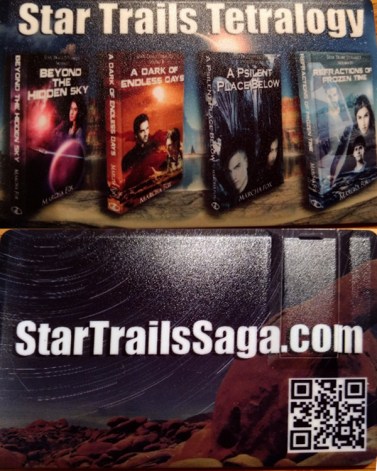
What you’re looking at are photos of the latest and greatest way to share your books! As an author I think this is the coolest thing I’ve seen in a long time. Its actual size and dimensions are the same as a credit card, but the awesome part is that it contains a USB drive loaded with my Star Trails Box Set and latest novel, “The Terra Debacle: Prisoners at Area 51”.

These work great for book signing parties, especially for those who prefer an ebook, as well as for giveaways, drawings, and anything else you can think of.  They have a variety of styles, but I thought this particular one was best suited to show my books on one side and have the website and QR Code on the other. Just think how much easier it is to haul a box of these around versus print copies!

I got mine from https://www.usbmemorydirect.com. Check it out!

Is your inner Einstein looking for some brain candy?

paradox

This deliciously meaty and heavily researched book should be on everyone’s shelf. Of course, I’m prejudiced as a scientist myself. I thrive on nonfiction books like this, because they clear the dust from those remote corners of my brain, many of which haven’t been used in a long, long time.  In many ways, the content reminds me of the popular physics books Isaac Azimov wrote years ago, which I thrived upon, prior to actually obtaining a physics degree myself.

Probably what I liked most is its focus on the numerous paradoxes that exist in just about every field of study. The author includes sections on medicine, neurology, and psychology; astronomy, cosmology, and physics; and geosciences and math. He points out through a host of examples that there is still so much we don’t understand and thus so much to learn and explore. On the other hand, research is often subjective and highly biased, conducted to prove a point that financially benefits someone or, more likely, a corporation or industry.

So can you trust research results? Maybe, maybe not, making scientific findings paradoxes in and of themselves.  Science should represent facts, but does it? If someone you don’t trust tells you one thing, scientific data notwithstanding, do you automatically assume the opposite to be true? Do you trust everything the pharmaceutical industry tells you? The tobacco industry? Monsanto? The government? How many times has USDA’s official “food pyramid” changed? How many drugs or food additives have been declared “safe” by the FDA only to be proven otherwise at a later date? is it a paradox we can’t believe so much of what we’re told in the name of science?

You’ve probably heard the quote “Lies, damn lies, and statistics”. The section on mathematical manipulation was particularly fascinating, especially pointing out a statistical flaw (or method, depending on whom you ask) known as HARKing, “hypothesizing after the results are known.” Sometimes, remarkable discoveries are found that way; but, on the other hand, it can be used deceptively.

Weimann notes how correlations are often implicated as causes, when there’s no solid evidence to substantiate it. Along similar lines, in some cases, I would have liked to have seen a specific source as opposed to the massive bibliography at the end. While I understand that footnoting every fact would have been a Herculean task, I definitely raised a eyebrow from time to time wondering, and would have appreciated more substantiation. Ironically, the author himself points out how so much of published scientific findings are suspect, yet other times presents them as gospel. I find this somewhat ironic, perhaps a subtle play on the title, perceivable only at the subconscious level, or maybe it’s the author’s way of messing with us.

What can we believe these days? Sometimes, it’s hard to tell. In some ways, the entire book is a paradox, where facts are provided on one hand, yet the overall theme is that contradictions lie all around us. It’s as if it the book’s underlying message is something like, “This is all the cool stuff science is discovering these days, but don’t believe everything you hear.”

Maybe you need to be a scientist to see the humor in that. We nerds do tend to have a weird sense of humor, a trait that’s occasionally, but not always, captured on the popular TV show, “The Big Bang Theory.” It’s a matter of laughing with versus at someone and, more often than not, the humor in that show is directed at mocking those who are different. Personally, as a physics major myself, I find it marginally offensive, and if I were of certain political persuasions, I’d be out there protesting and demanding it be removed from the airwaves. Not that scientists can’t laugh at themselves. They just do it at a level the average person doesn’t grok.

Digression aside, Paradox contains a wealth of science, much of it unknown or cutting edge; the beauty of it lies in pointing out–sometimes clearly, sometimes, not–the various contradictions afoot. A favorite saying among physicists and mathematicians is that something is “intuitively obvious.” That tends to show our arrogant side, since so much isn’t, such as his expose of the number one in the math section.

One human behavior paradox I particularly enjoyed in Weimann’s book was in the section that addresses psychology. As humans, we want choices, even demand them, but too many options are overwhelming and tend to result in a person not selecting any of them. I know I’ve experienced this in the grocery store, where there is so much to choose from (especially in the ice cream cooler) that walking away and thus doing without is a far simpler decision, and probably healthier. Another example would be the plethora of political ideologies (some of which are idiotologies) where people scream for freedom to express their own views, then want the entire world to conform to their beliefs, a primary reason why democracies fail.

Some sections are more controversial than others, including the age of the Earth, as well as whether global warming is attributable to a natural climate cycle, which the Earth has endured for millennia, or being contributed to by fossil fuels. I must say, that section tended to convince me of the latter, though I previously leaned toward natural cycles. I found the section fascinating that addresses how our brains have evolved and actually become smaller. The author states that scientific evidence indicates that once daily environmental threats are removed by a “civilized” society, brains shrink, while disease increases. Apparently, “Survival of the fittest” conditions refine a species to top efficiency, whereas survival for everyone, including the drones, downgrades the species, generally. Who woulda thunk it?

The contradictions paradoxes represent keep us honest and humble. They remind us that all may not be as it seems, that our sense of reason may be flawed, implying we’re not as smart as we’d like to think we are. What we believe is impossible is limited only by our knowledge of natural law. Perhaps the only individuals from centuries past who wouldn’t be surprised by what we’ve achieved would be Nostradamus and other visionaries who were considered crazy in their own time.

While this book serves as brain candy if you’re a scientist, you don’t have to have a physics degree to appreciate or understand this information. Rest assured, it’s presented for a lay audience, but won’t be palatable for everyone. For those who find science boring, it’ll serve best as bedtime reading for insomniacs.

On the other hand, this is a must read if you’re a science aficionado or entirely immersed in it by degree or profession. Stretch your synapses to fields outside your own! If you love science, yet aren’t formally educated in its tenets, Paradox is a wonderful primer that will keep you informed of some of the most interesting subjects under investigation today. If you’re surrounded by scientists or engineers, but aren’t one yourself, yet want to participate in conversations at work or social gatherings and show you’re smarter than they think you are, this handy volume will provide a wealth of the latest information on what’s going on out there in the world of research, both in the cosmos and on planet Earth.

Those heading for college to obtain a technical degree can benefit greatly as well. If you’re not sure which field you want to go into, you may find something that grabs you. Furthermore, this material will help grease the skids, so to speak, introducing concepts that will make them easier to understand later. Our brains require synaptic connections to work properly, and if a concept is entirely new, it’s harder to grasp than one with some level of familiarity where a niche has already been prepared in your grey matter, if you will. Anyone home schooling their kids will also find this an excellent resource. If you’re a science fiction author, you definitely need this book, not only to keep your writing credible, but to likewise trigger a wealth of new ideas.

As you can tell, if nothing else, this book made me think and possibly stimulated my neurons a bit too much. All that aside, even if you’re not interested yourself, pick up a copy of this five-star book and give it to your favorite nerd. They’ll be forever grateful.

You can pick up your copy on Amazon here.

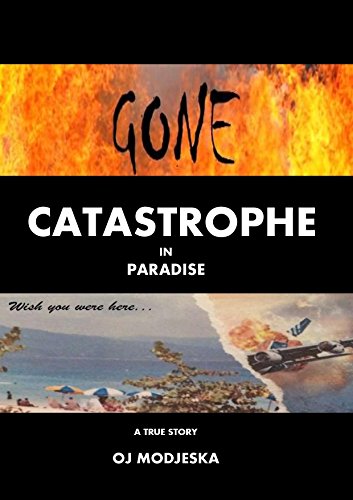
“Gone: Catastrophe in Paradise” by O.J. Modjeska

gonecatastrophe

This book reminds me of the movie, “Titanic” in that you know from the start it’s not going to end well, yet up until that horrible moment, there’s nail-biting suspense as you wish that, somehow, it isn’t true and never happened. And like the Titanic, this incident is also horrifyingly true.

I blew through this gripping, yet heart rending book in a single day. I can’t name a single novel at which I’ve shed more tears. It recounts in incredible detail what went on behind the scenes of the catastrophic plane crash that occurred March 27, 1977 on Tenerife, one of the Canary Islands, when two jumbo jet Boeing 747s collided on the ground, killing 583 people.  I remember that accident well and how horrified I was that something so terrible could happen. I’d never even heard of Tenerife until that time, and unfortunately, every time I’ve heard it since, this tragedy is the first thing that comes to mind.

The author takes you, step by step, through all the events that led up to it, again showing that every disaster has multiple causes, an unfortunate chain that could have been broken at any number of points, yet never was, resulting in the unthinkable. Incredibly, it started way before that, with the placement of the airport at a horrible location where banks of fog were known to roll in from the adjacent mountains. Folklore has it that the “X” on the map was originally to indicate the place NOT to place the airport, yet later that rationale was lost, Murphy’s Law prevailed, and that was exactly where it was placed. How ironic and how human.

Having worked at NASA for over 20 years, including during the time immediately following the Challenger accident as well as when Columbia broke up over Texas skies in 2003, I’d already seen that pattern. It’s never one, single thing, one single mistake, that causes a major disaster, but an unfortunate chain that is seemingly cursed by fate.

It made my blood boil that it actually started with a terrorist attack on Las Palmas, another airport in the Canary Islands. While I’m sure there’s a special place in hell for the insidious individual perpetuating that scourge, it’s horrible the damage and loss of life their barbaric beliefs have caused. In this case, their actions of detonating a bomb in the Las Palmas terminal forced numerous aircraft to be rerouted to Los Rodeos, an airport far too small to accommodate such an influx of unexpected flights, especially wide-body, jumbo jets like the Boeing 747.

Truly, this situation was an accident waiting to happen from the start as two tower controllers near the end of their shift attempted to manage the unexpected situation with antiquated equipment; they didn’t even have ground radar. These critical circumstances were further exacerbated by cultural issues and the quirks of human nature, always a factor in such a tragedy, yet so often far from deliberate. Someone makes a bad decision, never dreaming in their worst nightmare what the result will be. And the coup de grace was the fog.

I’m not sure it would constitute a spoiler to say more, given the unfortunate end result is well known and documented. To say I enjoyed the book is a bit of a misnomer, given it was far from pleasant, yet a very emotional experience, which to me is the hallmark of an outstanding book.  This one is skillfully written and represents meticulously detailed research, which provides a three or even four dimensional view of the happenings of that day.

I’m probably not the “average reader” since I worked in shuttle and payload safety at NASA, I where I personally participated in accident investigations, had classes in such, and was involved in the post-mortem of the Columbia accident. I’ve read NTSB reports of other airline accidents with interest and had the privilege of attending Aerospace Medical Association Conferences a few times where such things were discussed, including TWA Flight 800, which went down in flames July 17, 1996 after taking off from JFK airport in New York.  Some pretty interesting theories exist related to that one, too, which were not included in the official accident report.

The author did a spectacular job of leaving no stone unturned, reporting the situations, circumstances, and results in an objective, yet thoughtful manner, demonstrating once again that accidents don’t just “happen,” at least not of this scope.

The message, of course, for us all, is to recognize that nothing in life is guaranteed. There’s no telling when what appears to be a benign decision might be the fatal link that takes a normal day into the realm of tragedy. For the human factors involved alone, this book deserves attention, especially for those who work in any industry that has the potential for a similar disaster.

I particularly appreciated mention at the end of various individuals reporting paranormal and ghostly apparitions appearing from time to time on the runway. This is the case of various locations where horrific loss of life has occurred. As a professional astrologer, upon finishing the book, I immediately cast the event chart for the accident and could see that there were definitely very sordid aspects in play at the time, all of which reflected much of what was included in the book.

Whether or not you believe in astrology, disaster charts tend to include details that fall into the category “you can’t make this stuff up.” For example, for this disaster it showed fog and unclear communications, power trips, rebellion against authority and regulations to one’s own self-undoing, death and separation from loved ones, and a tremendous amount of activity in the 8th house of death, including the asteroid Icarus, namesake of the mythological individual who tried to fly but went down in flames, on the cusp of the 8th house. It shows the compassionate action of those on the ground, and even that Tenerife would ultimately bear the stigma of being remembered for this horrific event. No, you can’t make this stuff up.

Read this book. It’s outstanding, albeit heartbreaking. And never take anything for granted again. I give this nonfiction thriller 5 stars for content, even though there were a few grammatical issues here and there. The research more than compensates.

You can pick up your copy on Amazon here.