Unknown's avatar

About Marcha's Two-Cents Worth

I'm a science fiction author of the Star Trails Tetralogy, retired after two decades working at NASA, defected from my physics training to become a professional astrologer, and various other acts of rebellion. More recently, I've teamed with Pete Risingsun in writing "The Curse of Dead Horse Canyon: Cheyenne Spirits" which was released in July 2020 with more to come.

An Author’s Lament on a Hot Summer Day

writeforreviews2

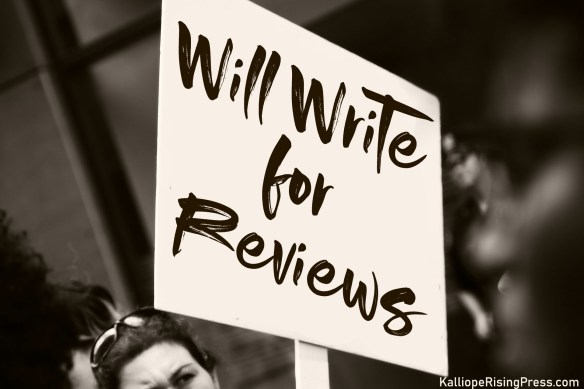
No doubt you’ve seen those unfortunate individuals on the side of the road with a sign that says “Will Work for Food.” Somehow I can relate, though I admit I’m not quite as destitute as those poor souls. Nonetheless, if you’re an author, unless you have a patient spouse who pays the bills or an alternate source of income such as a day job, retirement, or you have the good fortune to be a trust fund baby, chances are your income could be in a similar range, or possibly even less. Way less, like in negative numbers.

It seems no one these days wants to pay for anything, especially if it’s creative. The starving artist has been a familiar entity for eons. People want their music for free, their reading material for free, their games for free, and their artwork for free. This is what the electronic age has brought us. Now that books, music, pictures, and even movies are no longer on tangible media, they’re expected to be free. And of course, now that they’re teaching AI to create, in no time artists of all varieties could be out of business entirely. Muses today get no respect.

So tell me–who out there in any other profession, whether it’s accounting, engineering, administrating, or heaven forbid, even politics, is willing to work for free? To coin an apropos phrase from “Ferris Buehler’s Day Off,” Anyone? Anyone? When’s the last time you went into the grocery store and got your food for free?

Now that I’m retired, I can indulge in pursuing my work as an author. Unfortunately, lately that’s been directed more at marketing and promoting than creating. And the frustration some days is downright scream-inducing. The cash going out for services far outweighs what little comes in. If I were a logical person, I’d quit. If it were only about money, I’d quit. But do I? No. Because writing is in my blood (at least my astrological imprint, which features Kalliope, the muse of epic poetry on my ascendant). While I can make ends meet (barely) through other means, I’d love nothing more than to make a generous (or even adequate…okay, even meager) income from my writing. Tax write-offs are nice, but after a while it gets old. Just once I’d like to finish in the black.

The one thing authors appreciate (most the time, anyway) is a review, especially when we give away our books. And trust me, selling it for 99c is virtually the same as giving it away. Thinking about how long it took to write, edit, and publish it is verboten, because that’s downright depressing. I couldn’t even begin to calculate what I make per hour when selling a book for 99c, most likely less than a Mexican peso per hour, maybe even per day, if that. Yet people who are qualified to do no more than repeat the mantra, “Do you want fries with that?” want $15/hour. Right. And people in hell want ice water.

Reviews are important. Once you get a certain amount, vendors such as Amazon give your book a little more attention and help. If you want to look for an agent, be accepted by certain promoters (for a generous fee, mind you), or even expand into the audio book world, reviews are one measure of your popularity.

Thus, to me, it’s no more than common courtesy to leave a review, especially when you get a few hours entertainment and enjoyment out of a book that took someone a considerable amount of time and effort to produce. If you don’t like it or don’t finish it, fine. No review is better in most cases than a really bad one. Yet, some don’t take your book seriously until you have a few bad ones to show it wasn’t just your family and friends posting them (which isn’t as easy to achieve as you may think, unless you have some serious blackmail material). Granted, reviews are subjective and one man’s trash is another man’s treasure. I get that.

More than likely, unless you’re a fellow author you haven’t even made it this far in my rant du jour. But even fellow authors aren’t always diligent in leaving a review. It doesn’t have to be an essay worthy of a Pulitzer Prize; a few sentences will do.

We authors ask so little. Is it really that difficult to log into Amazon? You know it’s not. If you bought it there, they’ll even remind you and send a link. And the next time you get a book for free or less than you pay for a good cup of coffee, feel it’s your obligation.

I, for one, would rather work for royalties, but reviews, especially a good one, can make it seem at least marginally worthwhile.

So get off your lazy ass and leave one today for a starving author who, in return, will not only love you forever, but might even keep writing. Capisce?

Today’s Writing Tip

typewriter-801921_1280 copy

If your story has several unfamiliar terms, such as off-world science fiction or a medical thriller, consider including footnotes or a glossary. Always define such words at first use, a standard procedure in technical writing. This can be done drily, i.e., in parenthesis, or through a combination of dialog and narrative. For example, a character could mention the unfamiliar term, which is described in the following paragraph through the viewpoint of the protagonist. The same advice stands for acronyms.


Today’s Writing Tip

writing-pad-3229690_1280 copy

When you switch to a new point of view, make sure the reader knows how the new person fits into the story. If possible, introduce or foreshadow the new character in the preceding chapter. This provides better continuity.

On the other hand, sometimes it works for a story to be pieced together like a mosaic, particularly mysteries. Getting into the characters’ respective heads can show their motivation.

Today’s Writing Tip

wood-3182655_1280 copy

Switching point of view can be risky. I’ve sent a book to the DNF (Did Not Finish) pile for alternating POVs that didn’t mesh or show where the story was heading. Once readers connect with your protagonist, they don’t like to change. It’s also important to establish some semblance of a plot early on. This one comprised two different people seemingly driving around randomly which failed to grab me since there wasn’t sufficient background to add the needed suspense so I’d wonder what was going to happen next. It was as if the author was trying to figure out what was going to happen next herself. BOOOOR-ING!

Today’s Writing Tip

technology-3200401_640 copy

Some authors lean more toward action and dialog while others favor imagery and emotion. There’s a place for all of it, depending on the scene. Knowing what to include where will demonstrate your skill as an author.

Never slow down heavy action with a lot of detail. Settings should be established beforehand as well as the protagonist’s emotional state.

Today’s Writing Tip

paper-3242863_1280 copy

As the author, a story that becomes a series is usually thought of as a single book. Readers, however, may not read them in order, so be sure to include relevant backstory information so they can follow the characters and plot.

This is something to watch for in your final edit. Ask yourself if occurrences in a previous story need to be reiterated for the current story action to make sense to a reader who hasn’t read the previous book. Such recaps are also appreciated by readers where significant time has elapsed since reading its predecessor. If your books are released years apart, then this is a given.

Today’s Writing Tip

nobody-2798850_1280 copy

If your book is fiction, the print version can do without a table of contents. Since it’s more difficult to find your way around an ebook, however, a table of contents is not only helpful but required by some ebook distributors.

Generating it through Microsoft Word, however, is not going to work properly. Per the Smashwords Style Guide, you should bookmark each chapter heading, which is then connected via hyperlink to the table of contents. This works nicely for the Kindle version as well.

Today’s Writing Tip

laptop-3303835_1280 copy

Page numbers are required in your book, but other headers or footers are optional. Make sure they contribute in a positive way, not serve as a distraction. Use a smaller, unobtrusive font with adequate space separating them from the text.

Including the author’s name on one side and the book’s title on the other are common headers. They tend to look best when justified to the outer margins. Setting them up to behave properly in Microsoft Word can be a challenge, however.

Today’s Writing Tip

laptop-3265726_1280 copy

Your book interior’s layout should be pleasing to the eye. The opposing pages should look symmetrical and have adequate margins so the words don’t look crowded. Formatting contributes significantly to a book’s readability.

Formatting should be virtually invisible. If it’s too dramatic, it can distract readers and prevent them from becoming totally immersed in your story. Poor formatting will do this for sure!

Today’s Writing Tip

laptop-3253347_1280 copy

People DO judge a book by its cover. Not only must it look professional, it also needs to represent the story as accurately as possible. Capturing the feeling of a story graphically is an art in itself.

Using the templates found on Create Space can label your story in a negative way. Your cover deserves as much attention and creativity as the story it presents. Neglecting this important facet can doom your book to obscurity.