Unknown's avatar

About Marcha's Two-Cents Worth

I'm a science fiction author of the Star Trails Tetralogy, retired after two decades working at NASA, defected from my physics training to become a professional astrologer, and various other acts of rebellion. More recently, I've teamed with Pete Risingsun in writing "The Curse of Dead Horse Canyon: Cheyenne Spirits" which was released in July 2020 with more to come.

Today’s Writing Tip

laptop-copy

The Greeks had six words for love and would be horrified at our lumping them all together. For example, eros is love of a sexual or passionate nature; philia is deep friendship; ludus is playful love, such as flirting; agape is love for everyone; pragma is long-standing love, such as seen in couples who have been married for many decades; and philautia is self-love.

This is an example of how a language or even your vocabulary contributes to (or conversely, limits) the precision that defines strong writing, i.e. using exactly the correct word. Besides showing expertise in expression, it also helps avoid unnecessary use of adjectives and other modifiers. If the “right” word is available, use it!  This is why reading the dictionary comes in handy because often the word you need is not in common usage or on the tip of your tongue.

Today’s Writing Tip

laptop-4 copy

Do you ever read the dictionary? Words are an author’s tools. Your vocabulary will determine the quality of your writing. Using the word that precisely expresses your meaning strengthens your writing.

By reading the dictionary from time to time, you’d be surprised what you might discover that will come in useful. Along those lines, when you’re reading and encounter an unfamiliar word, look it up. While you may be able to discern its meaning from the context, it is likely to have a certain slant that adds to the sentence’s meaning.

This is the kind of precision that makes your writing stronger.

Today’s Writing Tip

laptop-3 copy

Does your story have a deeper, philosophical or thematic meaning than meets the eye? Symbolism is an important element if you really want to make a point in a subtle way. This can make the difference between fiction and literature.

When I was in school studying literature I often wondered if the author deliberately included the symbolism or if it just “happened.” This is something to think about as an author. Incorporating a strong theme and symbolism into your story can give it substantially more depth. While it may escape the more casual reader, anyone who knows something about literature, particularly some reviewers, will catch the meaning and give you more respect as a writer.

Today’s Writing Tip

laptop-2 copy

Cross-genre stories become more popular everyday. This is one way to appeal to a broader audience, provided it’s done in a way that doesn’t stretch credibility so far it snaps or not deliver what the reader is expecting.

Romantic suspense has been around for a while as well as several others that are primarily a romance, such as historical romance, Gothic romance, and more recently science fiction romance. Obviously, the romance element works well to add interest to a story as well as its setting and circumstances.

The primary theme of romance is “boy gets girl” or vice versa. However, other genres, such as mysteries, thrillers, horror, and fantasy can all provide the backdrop and, in some cases, comprise more of the plot than the romance element.

How well the plot in one of these other genres is constructed will determine whether it’s simply another setting for romance or legitimately fits into another genre solidly enough to not be considered simply a romance in disguise.


Today’s Writing Tip

home-office copy

A cross-genre sometimes referred to as Sci-Fa blends the elements of science fiction and fantasy. Know where one ends and the other begins. Fantasy has a magical quality that is often unexplained–it’s just there. Science fiction typically has a technological basis.

However, there are numerous stories, including Star Wars, which incorporate elements of both. The space battles and technology in the Star Wars stories were clearly sci-fi, but “The Force” and its powers were more metaphysical, and thus fantasy, in nature. Having a space traveler arrive on a planet with magical powers is another possible theme. Done well, this cross-genre can appeal to fans of both genres.

Today’s Writing Tip

blank copy

Similar to fantasy, anything is possible in science fiction, provided you set it up properly. The main difference between fantasy and sci-fi is whether it’s unexplained magic, related to the environment (such as crystals), or purely technological.

Whichever you choose, make it convincing. Science fiction requires some explanation, usually of a technical nature, even if you don’t go into the details. In other words, it’s likely to involve certain devices. In today’s modern world, it’s becoming more and more difficult to stay ahead of the technology as what was once science fiction becomes science fact. Thus, science fiction seems to be trending more toward futuristic stories, often dystopian, of the consequences of advanced technology.

Today’s Writing Tip

alphabets-copy

Your story action and plot require feasibility. In fantasy, anything is possible, but you must lay the foundation so its credible within the realm you’ve created. Designing a world where magic is the norm isn’t as simple as you may think.

Every cultures operates within certain norms, rules, and even laws. How are these powers gained? Can anyone use them? What about those who use them for evil? Are all powers created equal? Do certain items (swords are very popular) contain magic accessible to only one person? What do they need to do to unleash it?

Without some rationale, fantasy can fall flat. No matter what you make up, it has to be convincing so the reader can feel as if they’re part of that world. If there’s no foundation, they’re likely to roll their eyes and find something else to read.

Today’s Writing Tip

home-office-3 copy

Interacting with fans, either on social media or at signing events, is what keeps them engaged. You have to sell yourself as a person as well as your work. This is not always easy for authors who are introverts.

One way to get over your trepidation step by step is to go to a few such events to scope them out, meet other authors, and observe how it works. Starting in your local area is also advised, where you’re more likely to meet friends and neighbors that make you feel comfortable.

Being active in a local writers group is another way to get over your jitters. If you’re well into the publishing world, volunteering to speak to the group is another avenue. If you’re terrified of public speaking, find your local Toastmasters club and sign up! They’ll help you get past it with flying colors.

Today’s Writing Tip

e-mail- copy

Including interesting content on your Facebook page or in your newsletter is important. Your audience will quickly get bored if all you ever do is hawk your books. What interests do most your readers have? What will they find interesting?

If you don’t know, then there’s a good chance that’s you’re also missing out on venues where you should be marketing and promoting your work. How do you find out? You might try the personal approach and visit the Facebook pages of some of your “fans” who have liked your author page. See what kind of information they’re sharing and the types of activities they enjoy with their friends.

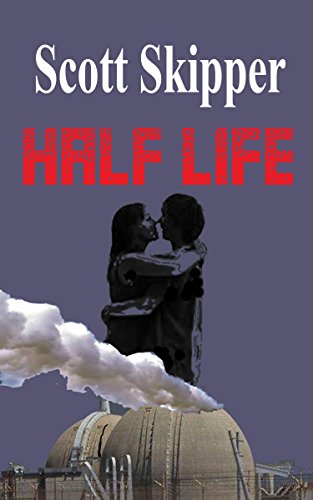
Review of “Half Life” by Scott Skipper

HalfLifeCvr

The premise of this story is that a brutal earthquake and tsunami, similar to what happened to Japan a few years back, strikes California, causing a meltdown at a decommissioned nuclear plant. Due to various political stalemates, the fuel rods had been left on-site rather than being transported to a permanent storage location, causing considerable havoc as radiation saturates the populated area around Los Angeles. The credibility of such an occurrence is so high, that I can’t help but wonder how much of this book will turn out to be prophetic.

The story takes place during a gubernatorial election year and the political issues associated with this disaster are paramount. One thing potential readers need to know about Scott’s books is that they are extremely political incorrect. If telling it like it is bothers you, then don’t even try reading one of his books. It will just piss you off, you’ll miss the entire point, and then you’ll give him an abysmal review, which will be totally undeserved. Why? Because his books are well written, witty, boast clever plots, are populated with convincing characters, and don’t shy away from some of the political issues in the news today. Personally, I find them hilarious, albeit painfully true.

This complex tale not only covers the political and conspiratorial aspects of such a preventable catastrophe, but its impact on the main characters, the agendas of those running for political office, and those trying to clean up the mess. The technical details were absolutely outstanding. As a science geek myself, I ate them up, because I’m one of those weird types who loves to see science tightly woven into a plot. It lends authenticity, and when well done, is instructional. Obviously, he did his homework researching such a mess and what it would take to clean it up.

Scott Skipper is one of my favorite authors, especially his “Alien Affairs” series, which I love. This story isn’t quite as enchanting and took a while to get rolling. The “travel-log” chapters near the beginning moved pretty slowly, even though I could understand he was trying to demonstrate the frustration and complexity of Eric and Jamie’s convoluted  trip home, which required a jaunt through Mexico to skirt the “hot zone” left by the power plant meltdown. If you get stuck somewhere in Mexico, somewhere around Guadalajara, skip ahead–you won’t miss much and the rest of the story is well-worth it.

About a third of the way through the story it really took off in typical Scott Skipper style with the sarcastic humor and snarky characters I love. One secretary, Enid, served as great comic relief with her British slang and often racist and bigoted remarks. This story would make a fantastic movie, the main problem being that the political leanings of those in Hollywood wouldn’t touch this story if they were wearing a hazmat suit and wielding an insulated barge pole.

Since I think the story could use a bit of tightening of those early travel-log chapters and would like to see a more sophisticated cover worthy of what is really a great story, I can’t quite give this story five starts, but certainly 4.5. Just be warned, if you’re easily offended, don’t even bother, unless you’re open-minded enough to recognize the many truths embedded in this thought-provoking, cautionary tale.

You can pick up a copy on Amazon here.