Today’s Writing Tip

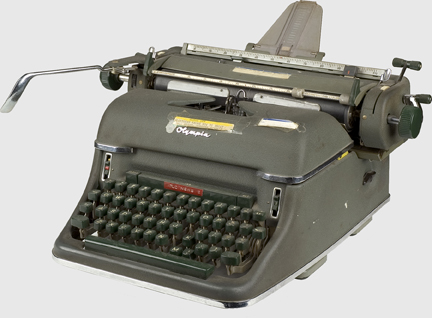
typewriter

Understand there are several types of editors. Just because you hire one, doesn’t mean they’ll do the job you expect, especially if you don’t understand there are different types.  They may do a great job within their realm, yet miss other problems. I can’t tell you how many problems I’ve found in books where the author supposedly hired an “editor.”

Here’s the basic run-down: Proofreaders look for typos. Copy editors look at punctuation and grammar. Line editors look at everything. Content editors look at plot & characterizations. If this is news to you, then I suggest you read this great article that gives more detail.
Today’s Writing Tip

typewriter-801921_1280 copy

Suspense is essential in any story. If you don’t know what will happen next, that’s a good indicator your reader won’t, either. The more obstacles between the protagonist and what s/he wants, the better. When your character gets him or herself into such a mess you don’t know how s/he’ll get out, then you’re on to something. Be sure to let your character solve the problem in his or her own way.

Today’s Writing Tip

technology-3167297_1280 copy

Be original! If you’re going to rehash an over-used plot vehicle, give it a new twist. If your story is too predictable, you’ll lose readers. If you must use a theme that’s not original, such as zombies, vampires, space battles, or swords and sorcery, make sure your characters are real and interesting enough to carry the story. You see this in romance novels all the time. There’s nothing new about falling in love, but engaging characters who pull you into their emotions make it work.

Today’s Writing Tip

paper-3172594_1280 copy

If you write science fiction, don’t violate the known laws of physics without providing rationale for doing so. Invent new laws if you like, but make them believable. A lot of technical folks are likely to be in your audience and you’ll lose them forever if your science isn’t credible. Noises in the vacuum of space (like the explosions you hear in movies), earth-like gravity on a small asteroid, and unrealistic orbits are some of the things to look out for. If you don’t know something that relates to science, look it up or ask someone who does. Satires (such as “The Worst Man on Mars”) have a bit more latitude.

Today’s Writing Tip

notes-514998_1280 copy

All fiction needs to be convincing and seem real. Create any possibility you want, just make sure the reader will be convinced. If you’re writing fantasy or science fiction, you need to build a world that your readers will believe is possible. Spend sufficient time creating your story’s environment to a high level of detail and it will pay off later, perhaps in even providing new plot twists.

Today’s Writing Tip

laptop-3087585_1280 copy

If something throws you out of a story you’re reading, figure out why. Then make sure you’re not guilty of the same thing. You can learn from all writers, whether more or less skilled than you are. Typos are one thing that really jolt me out, though blatantly inaccurate science is a close second.

Today’s Writing Tip

home-office-336378_1280 copy

Read your work out loud as part of your editing process. If you find yourself saying something different than what’s written, consider rewording it accordingly. If it’s awkward when read aloud, it’s not the most natural wording. Even better, read it aloud into a recorder and then listen, especially if you’re an audio-type. This is very effective for catching redundancies.

Today’s Writing Tip

alphabets-2306479_1280 copy

Editing is essential, but it’s extremely difficult to edit your own work. Letting your work rest as long as possible before revising and/or editing helps view it more objectively. If you absolutely can’t afford an editor, arrange a beta exchange with another author, preferably one who’s seasoned, not just someone who will praise your work. Make sure both of you are skilled enough to do the job and clarify your expectations.

Today’s Writing Tip

desk-2158142_1280 copy

When you encounter a word you don’t know, look it up! It may be just the one you’ll need later. Words are a writer’s tools. Having a vast vocabulary is key to expressing yourself clearly and easily. Reading the dictionary is often an interesting pastime to a true writer.

Today’s Writing Tip

notes-514998_1280 copy

Increase your vocabulary on a regular basis. Subscribe to services that provide a word of the day or even read the dictionary. You’d be surprised the cool words you’ll find! This is not to say that you should be using $5 words galore, but stimulating a reader with a new word occasionally, preferably when its meaning can be derived from the context, is part of being a professional author.