Interview with Ted Weimann, Author of “Paradox: Fascinating Anomalies of Science”

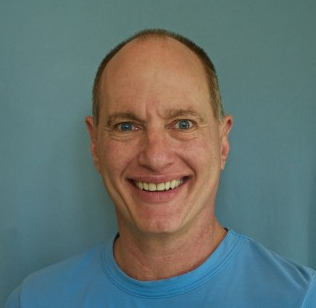
webTedTed Weimann is obsessed with science and shares what he learns generously in his recent book, Paradox: Fascinating Anomalies of Science from Quest Publications. If you want a crash course on the hottest topics in science today, I highly recommend this book, as you can tell from my recent review. Ted’s enthusiasm and love of learning comes through in his writing, thanks to his ability to synthesize the information and then explain it in a way a person of average intelligence can understand.

Ted was gracious enough to grant me an interview, which gives us further insights into his brilliant mind and his ongoing quest for knowledge, fueled by his “Question Everything” attitude.


MF: What motivated you to compile Paradox’s rich collection of modern research?

TW: The thrill of learning about these fascinating topics.  I so thoroughly enjoyed the dark energy / center of the universe enigma over the years, that I began noticing other paradoxes.  They’re interesting.  For instance, who would have thought that France will experience a higher sea level rise than Iceland when the Greenland Ice cap melts?  But with the reduced gravitational attraction upon the North Atlantic Ocean because all Greenland’s ice mass is gone, and with the resulting glacial rebound, France actually will.

Something else I didn’t include in that section because I didn’t think about it at the time, is when that part of the North American Plate glacially rebounds, Iceland’s continental rift will likely increase.  As you know, Iceland is practically split in half because it straddles two tectonic plates that are moving apart from each other.  Its western half will experience some glacial rebounding when Greenland does.  Since its eastern half is on the Eurasian plate, that part of Iceland likely won’t, or if it does, will to a far lesser degree.  An increase in Iceland earthquakes may be in their future, perhaps even their volcanic activity will increase. We could talk all night about this one topic and all its implications.  Scientists could research it for years.  I find that pretty cool.


MF: Which part of Paradox is your favorite section?

TW: It’s changed over time.  First it was the section on dark energy.  And then it was black holes.  When I calculated the compression of a neutron star down to a black hole, I made mistakes.  Catching those mistakes was fun, and humbling.  And then I realized that the neutron star would start rotating faster than the speed of light.  Since I knew that this could never happen, I started researching the ways in which this violation of physics was avoided.  One of those ways is the decoupling of the magnetic field-lines when they cross the light cylinder.  I had never heard of a light cylinder.  That was another cool concept I got to research.

Plate tectonics made a run for the number one spot, but I’d have to say the chapters on the evolution and devolution of the human brain are my favorites.  So many questions remain unanswered.  Like how will our intelligence change in the future?
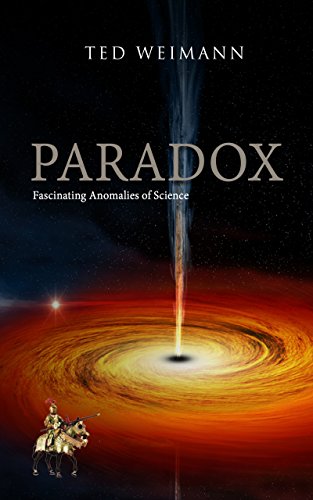

paradox

MF: Tell us about the research/facts presented in your book that surprised you the most.

TW: Probably the agricultural paradox.  I knew farmers produced more calories, yet had poorer nutrition than hunter gatherers, but I didn’t realize how much poorer their diets were.  I had always been led to believe that hunter gatherers lead such difficult lives compared to farmers.  And that’s not necessarily the case.

I also didn’t know that farmers used to live with their livestock.  Living in these cramped, filthy conditions is how their diseases evolved and became our diseases.  That was interesting.


MF: Do you have a particular source you trust more than others?

TW: The source I use the most, not necessarily for writing books, but for medical research, is pubmed.org.  I’ve been researching medical studies on their site since practically day 1.  But, as discussed in my chapter on the obesity paradox, the reliability of medical studies is far lower than it should be.  So, they’re not my answer to your question.

I’m sorry but, I don’t have any one source to hold up for you.  My thanks go to the majority of the experts that take the time to answer questions from me and I’m sure many other people.  Sometimes it was research for this book, but often I simply read about their research and had a question about it or its implications.  And most of these experts took the time to help me.  So, thank you to them.


MF: What do you think the next major technological breakthrough will be (that’s revealed to the public)?

TW: I might have to go with batteries.  I’ll be surprised if we don’t have vastly superior batteries 10 or 15 years from now.  And that simple advance will have profound changes upon the planet.  Think transportation, renewable energy, climate, and the lives of people around the world currently without power.  We’ll all benefit with that one, seemingly simple advance.


MF: If you were the one controlling the purse strings to a big chunk of grant money, which branch of science would you reward it to? Why?

TW: Renewable energy.  We’re making good progress and I believe we’ll get to where we need to be, but the sooner we get the cost of renewable energy lower than fossil fuels, the better off our climate, and everything tied to it, will be.

Where my passion lies however, is the likely extinction many large mammals will face, regardless of climate change.  Because of greed, religion and superstitions, the mega fauna that we all love are in serious danger.  I’d like to get Bill Gates, Ted Turner, Jeff Bezos and others together with the purpose of talking them into purchasing a huge track of land in the US and turning it into an African savanna.  I believe that’s the only chance elephants, giraffes, rhinos, cheetahs, and others, will have in the long term.  It might even turn a profit someday.


MF:  What percentage of critical medical knowledge do you think is being withheld from the public?

TW: Nearly 50% of all medical studies go unpublished.  To answer your question though, we’d have to define critical.  To me, all well conducted studies are critical, because they contain knowledge we need.


MF: Do you have any particular method for recognizing “fake science?”

TW: For me, I’d say it’s a combination of intuition and reason.  For example, I just had lunch with a friend who’s an avid hunter.  He was showing me photos and telling stories of his wild hog hunting trip, when he said the local experts he was hunting with told him that he should dodge a charging pig to the right, because they can’t turn to the left very well.  I told him I didn’t believe that.  Rationally, it didn’t make sense to me on an evolutionary basis.

If your gut feelings send you signals, or if the media headline seems a little too dramatic, question it.  Do your research.


MF:  What do you like to read in your spare time? Strictly nonfiction or do you ever take a break with fiction? If so, which genre?

TW: I was in my 30s when I read my 3rd fiction book, Jurassic Park.  The first two were The Little Engine that Could, and Bugs Bunny adventures, or something like that.  My 4th was Jurassic Park in Spanish, Parque Jurasico.  I started reading The Destroyer, a comedy/ adventure series during my recoveries from my spinal surgeries.  I’ve now read about 100 of them.  I also enjoy some comedies like The Hitch Hiker’s Guide to the Galaxy, and A Dirty Job.  In that book, the author has a hilarious comparison of an alpha male versus a beta male.  When I’m healthy though, it’s pretty much non-fiction for me.  I like to learn about the world around me.


MF: Do you have any other books planned or in-work at this time?

TW: I did have one I would love to write, but I knew I’d never pull it off.  I wrote all the living presidents, requesting interviews with them and their spouses, as well as access to the medical records of the presidents.  Of course, none granted me such access. My idea was to conduct a small sample study on the effects of the extreme stress of the presidency on health and aging.

Imagine how much I would have learned in the process.  That, would have been fun.


Yes, learning should be fun. I know it is for me, but far too many find it an unpleasant chore. Just think what the world would be like if we could find a panacea for this crippling attitude. Thanks to people like Ted, however, who shares these delicious brain candy tidbits so generously, hopefully others will find the intellectual stimulation as fun and interesting as the next computer game. -MF

You can pick up a copy of Paradox: Fascinating Anomalies of Science from Amazon or the publisher.



WATCH “RWISA” WRITE Showcase Tour – Day 3

RWISA TOUR (1)

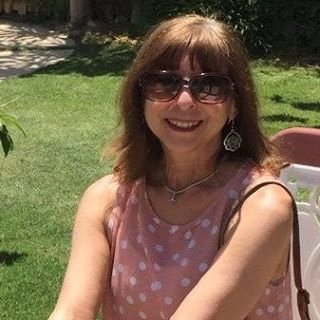
laurie-finkelstein

Laurie Finkelstein

Bulletproof Vest

By Laurie Finkelstein

The bulk, padding, and steel plates weigh me down. The protection of a bulletproof vest is necessary. No matter the weather, I wear the cloak. The weight is a burden, but I trek on because wrapped is the only way to navigate my journey. The jacket protects my heart from being blown to crimson shards of death.

A direct hit is avoided for days and nights, lulling me into calm and complacency. “All will work out fine,” I tell myself. The truth tells a story I want to change. All my will and might does not make an impact to stop the bombardment.

Experience and time separates me from tragedy. At any moment, the bullets strike. Inside or out. My house cannot provide security, nor can a million people surrounding me. With nowhere to hide, I am a target. Shelter and safety are nonexistent.

Discharges are held back while luck and grace harbor me. The slugs will come, however, in a piercing barrage without warning, and will pummel me.

Knocked to the ground, I am immobilized and rendered helpless. My breathing is halted. My movements are stopped, and I understand what assaulted me.

The shockwave subsides, and in small increments, I am able to take in air. Incapacitated, I continue to lie until I am rescued by the rational thinking buried under an avalanche of pain, doubt, and fear. My thoughts check my vitals to make sure I am in the here and now. “Stay in the moment,” I tell myself. “I can manage this. I will persevere.”

“Rise,” I command. The mass of the garb constricts my movement, but I stand, analyze what must be done, and begin to act. The warrior in me comes out. Battles will be fought. My impervious attire gets me through another crisis, and its weight comforts me. Without the guise, I am unable to prevail against the onslaughts, which pop out of the dark corners of another day.

Yes, my vest is cumbersome, but without my swathe I will not withstand the painful projectiles. Clips are filled, ready to punch and knock me down, disabling me should I forget for a moment to cloak myself within my protective armor.

My bullets are not made of lead, surrounded by a dense metal. The projectiles do not come from terrorists intent on decimating me. The ammo does not come from a police state or a dictator’s command. A barrel is not involved.

My bullets are made of depression, anxiety, and obsessive-compulsive disorder. Composed of irrational thoughts, insipid ideations, and ignorant rationalizations, they are crushing invisible forces. The capacity to shatter my resolve and render me dysfunctional invades me.

My unsociable enemy is treatable, but never disappears. My therapists validate my experiences of being trapped, resentful, guilty, shameful, ill-equipped, grief-stricken, lost, uncertain, and disabled. My growth in therapy helps me accept the challenge with compassion and empathy in my heart.

Throughout my lifetime three stages will haunt me.

Stage one is the onslaught of rounds. The crisis mode. The shock and pain.

Stage two is being slammed down, breath taken away. Sabotaged. Terms and feelings of the emergency are acknowledged.

Stage three is advocacy for myself. Stand. Breathe. Make decisions. Tools in hand to counteract the depression and anxiety and OCD. Utilize appropriate response and care.

Encouraged by others, I enroll in Toastmasters. Time for me to improve my public speaking and thinking on my feet. Professional and compelling ways of expressing my views is a talent I want to possess. Persuasive interactions are in reach. My computer with Google as my guide, I find the Toastmasters website. The rules and guidelines answer many of my questions. Ready to take on the challenge, I enter my credit card information and become a member. A direct thrust knocks me down.

At first, I don’t understand what attacks me. My heartbeat begins speeding up. My gasps for air speed up. My head spins with dizziness. The mighty effects of terror hammer me to the ground. Despair sinks me deeper into the attack.

Stage one. The thought of standing before people enunciating in a clear voice avoiding “ums” and “ahs” strikes with negative force. In a semi-frozen state of fear and regret, I struggle to make sense of my attacker. Groups of Toastmasters are warm, safe environments to learn public speaking and leadership skills. “Warm and safe,” I remind myself. Still my heart beats faster and my breath diminishes by the second. A ghost of recognition appears before me. Panic is familiar.

Stage two. My history tells me to take an extra Klonopin. Scared to death is not an option. Upon reaching my medicine cabinet with weak, wobble-producing legs, I discover my pill case empty. In my next move, I check the bottle. Empty. My heart beats faster and my limbs go numb. Sweat trickles down my forehead. My last attempt before I collapse in a heap of despair, I call my pharmacist. My trembling voice separated from my body explains my attack and lack of pills. “How fast can you fill the prescription?” my quivering voice speaks out. “Is ten minutes okay?” the pharmacy technician asks.

Stage three. My inner voice tells me to be brave. Think of a serene place. My happy place. Take deep soothing breaths. My toolbox is ransacked for more options until I come to grips with the present. The dispensary is too far to hike, so I must drive to pick up my pills. Cranked engine. Foot on pedal. Brake released. My self-talk takes me on a wild ride to the drug store. My trembling legs walk me to the back of the aisles. The friendly face of the tech reassures me. The credit card transaction is signed with a jellylike hand, completing the purchase.

Back in my car, I down the remedy with tepid water from an old bottle sitting in my trash. My panting is steadier, my heart pounding a little less. Within thirty minutes, I am relaxed, able to pursue my day. Ready to reassess my decision to become a Toastmaster. The choice is sound and important.

My bulletproof vest is worn as a badge of honor and survival. Without my garb, I would be a prisoner in my house, hiding in bed. Sick to my stomach. Useless.

The stigma of mental illness must be broken. My vest is worn with pride. I am a survivor. I am the voice of one in every five Americans experiencing the assailant. I am not alone.

~~~

Thank you for supporting this member along the WATCH RWISA WRITE Showcase Tour today!  We ask that if you have enjoyed this member’s writing, to please visit their Author Page on the RWISA site, where you can find more of their writing, along with their contact and social media links, if they’ve turned you into a fan.  WE ask that you also check out their books in the RWISA or RRBC catalogs.  Thanks, again for your support and we hope that you will follow each member along this amazing tour of talent!  Don’t forget to click the link below to learn more about this author:

Laurie Finkelstein’s RWISA Author Page

WATCH “RWISA” WRITE Showcase Tour – Day 2

RWISA TOUR (1)

Karen Ingalls

Karen Ingalls

A FISHY DAY

It was one of those wonderful August days when the sun was high and warm in the sky. The big cumulus clouds slowly drifted by, creating designs that filled Jim’s imagination, who at nine years could see all kinds of amazing sights. He had been playing with his model airplane in his aunt and uncle’s yard, where he spent the summers on their ranch in San Diego, California. Staying with Uncle Leon and Aunt Helen was always a special time of adventure, fun and farm work.

“Jim, do you want to go to the pasture with me? We’ll check the water trough for the cattle,” Uncle Leon asked, at the same time he took his handkerchief and wiped some perspiration from his tan brow.

“Oh, yes,” Jim responded with great excitement. He ran to the front porch and put his treasured airplane on the table next to where Aunt Helen sat in her rocking chair.

Uncle Leon walked over to the Allis-Chalmers tractor and stretched his long, thin legs up and over onto the metal seat. “All right, Jim, you can come on up now.” Jim awkwardly managed to climb up and grab hold of his uncle’s hand, who swung him onto his lap. With the turn of the key the tractor began to vibrate and the engine roared. Shifting the gears into forward, Leon yelled, “Here we go!”

The pasture was a favorite place for Jim with its rolling hills, oak trees, and green grass. It was always a peaceful place where a boy could run until he was out of breath, and then fall onto the grass and let the wind gently blow over his panting body. Many were the times that Jim would spend his days, just climbing in the oak trees pretending he was hiding from some enemy, or shooting squirrels with his imaginary rifle.

He and his uncle drove through the pasture until they came to a large trough sitting by a water pump on the top of a knoll. The cattle were grazing some distance away, but their occasional moos could be heard.

Uncle Leon helped Jim off the tractor and then sauntered up to the trough. “Not much water left so we best get this filled up.”

Jim was leaning over the trough where the top of it just reached his chest. “What can I do? I want to help.”

“Well, now, how about you pump the water in once I get it primed,” replied Uncle Leon with his usual smiling face. He was happy that Jim wanted to help, but he also knew that pumping water would be a big job for such a young lad. Once he had the water flowing with each downward motion of the pump handle, he instructed, “Okay, young feller, it is your turn now.”

Jim eagerly grabbed the handle and standing on his tiptoes, pushed it down, smiling happily when the water gushed into the trough. He repeated the pumping for as long as he could, but all too quickly his arms and shoulders began to ache. Jim did not want to admit that he was getting tired, but his uncle knew and said, “How about if I do it for a while?”

Once the water neared the top, Jim leaned over cupping some water into his hands. “This is the best tasting water I’ve ever had,” Jim thought to himself. He slurped several handfuls into his dry mouth.

Looking over at his nephew, Leon asked with a twinkle in his eye, “Did you see that fish drop into the water from this here pump?”

“What fish?”

“Why, that fish that came right out of the pump into the trough. I thought sure you would have seen him while you were drinking the water.”

“No, sir. I didn’t see any fish.” Jim wiped his mouth with his shirt sleeve and earnestly looked in the water.

“Well, he must still be in there.” Uncle Leon leaned over the trough looking for the mysterious fish. “Now isn’t that something. I can’t see him anywhere.” He peeked a look at his nephew, who now had eyes as big as saucers. “I wonder if you accidentally swallowed that poor little fish while you were drinking all that water.”

Jim stepped back from the trough and began to rub his stomach. “I don’t think so, sir.” The minutes passed and Uncle Leon continued to wonder out loud what happened to the fish. Jim began to imagine that the fish was swimming in his stomach. “I don’t feel so good,” Jim said as he stretched down on the cool grass.

Seeing that his nephew was fearful and feeling sick, Uncle Leon laid down next to him and pointed up towards the clouds. “Jim, look at that cloud up there. See the little one next to the big puffy cloud?”

He waited until Jim nodded his head and said, “I think so.”

“It kind of looks like a fish, doesn’t it? I wonder if that is the fish that was in the trough.”

Jim looked at his uncle, then up at the clouds, and then back at his uncle who was smiling from ear to ear. Uncle Leon laughed and began to tickle Jim’s stomach. “Or, is that fish still here? Where is that fish?”

Jim laughed and joked right back while he patted his uncle’s stomach. “No, I think that fish is right here!”

Soon they both stopped laughing and just looked at one another. “I hope I don’t tease you too much,” Uncle Leon said.

“Oh no, Sir.” Jim looked at his uncle and went on to say, “I like to tease my younger brothers. Mother is always telling me not to do it too much. She doesn’t want them to cry.”

“Well, I would never want to make you cry.” Uncle Leon put his big hand on Jim’s head. “Do you know why?” Jim slowly shook his head back and forth not wanting his uncle to remove his hand. “I love you too much to ever make you cry for any reason.”

With tears in his eyes, Jim whispered, “I love you, too.”

They spent the rest of the afternoon enjoying the sun, the warm breeze, and just being next to one another in the grass, watching the clouds drift by. It was a special day that Jim always remembered with a smile.

~~~

Thank you for supporting this member along the WATCH RWISA WRITE Showcase Tour today!  We ask that if you have enjoyed this member’s writing, to please visit their Author Page on the RWISA site, where you can find more of their writing, along with their contact and social media links, if they’ve turned you into a fan.  WE ask that you also check out their books in the RWISA or RRBC catalogs.  Thanks, again for your support and we hope that you will follow each member along this amazing tour of talent!  Don’t forget to click the link below to learn more about this author:

Karen Ingall’s RWISA Author Page